
A Guide to Dental Bone Grafts Before Implants
Our guide to dental bone grafts explains why they are recommended, what records to request, healing timelines, risks, and when to seek a second opinion.
A bone graft can add thousands of dollars and several months to an implant plan. That does not mean it is unnecessary. It means you deserve a clear explanation of what problem the graft is meant to solve, whether there are reasonable alternatives, and what evidence supports the recommendation. This guide to dental bone grafts helps you ask informed questions before agreeing to surgical treatment.
What a dental bone graft does
A dental bone graft is a procedure intended to rebuild or preserve bone in the jaw. Dentists commonly recommend it when a tooth has been missing for some time, when gum disease has damaged supporting bone, or when an extraction leaves a socket with limited bone volume.
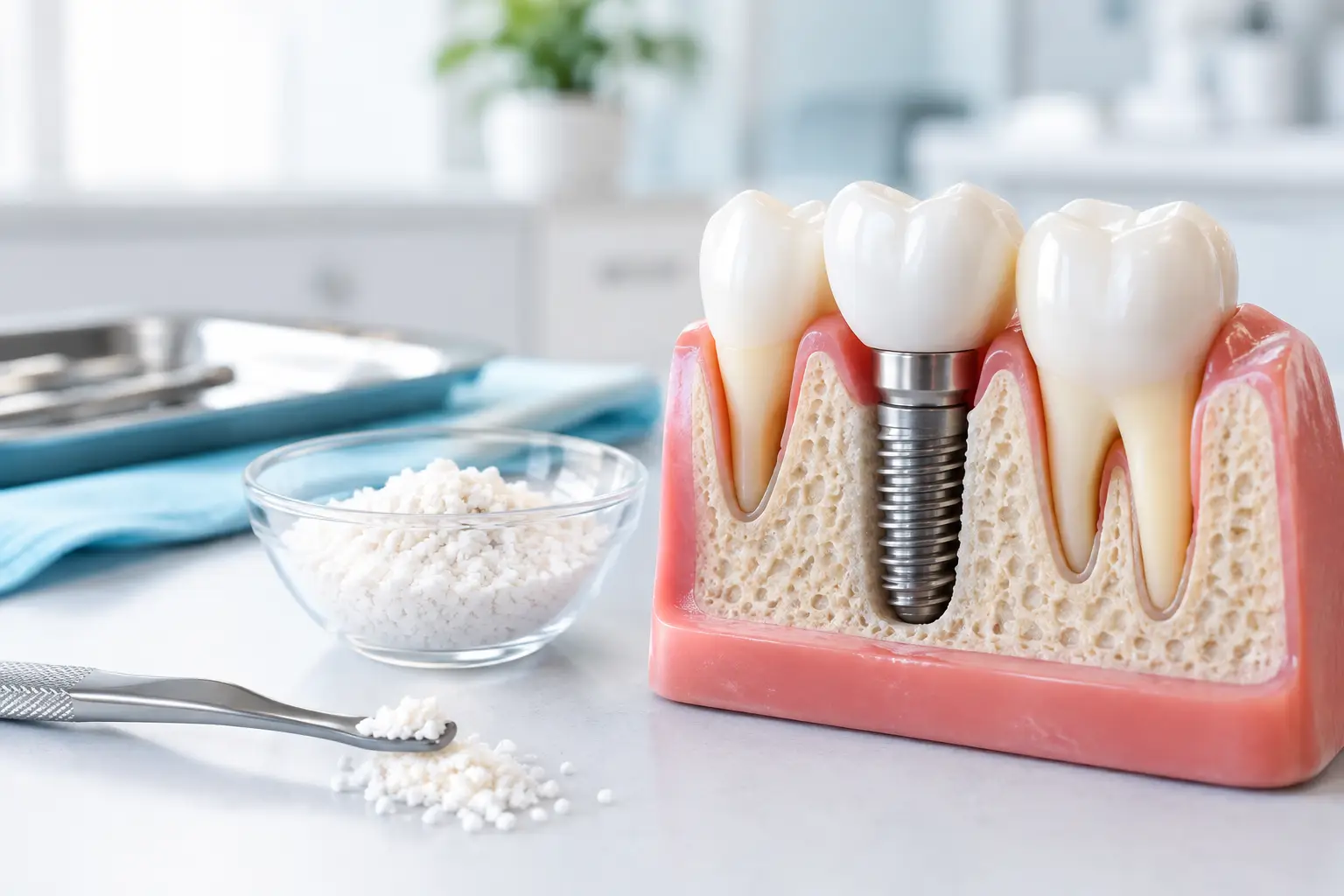
For an implant to be stable, it needs enough healthy bone around it. If the jawbone is too narrow, too short, or weakened by infection, an implant may not have adequate support. A graft can create a better foundation for the implant, improve its position, and help preserve facial contours in some cases.
The word “graft” can sound more dramatic than the procedure always is. Some grafts are placed in an extraction socket at the time a tooth is removed. Others involve a larger surgical area, particularly when bone loss is more significant or the upper jaw needs a sinus lift. The right approach depends on the location, the amount of remaining bone, your gum health, and the final restoration being planned.
Why a graft may be recommended
Bone naturally changes after a tooth is lost. The jaw no longer receives the same chewing forces in that area, and the ridge can gradually shrink. The most noticeable changes often occur during the first year after extraction, but bone loss can continue over time.
A dentist may recommend grafting for several reasons. An extraction-site graft, sometimes called socket preservation, may be proposed to limit bone collapse after a tooth is removed. Ridge augmentation may be needed when there is not enough width or height for an implant. A sinus lift may create space for an implant in the back of the upper jaw, where the sinus cavity can limit available bone.
These are different procedures with different levels of complexity, cost, and recovery. A treatment plan that simply says “bone graft” is not always enough information for a patient deciding whether to proceed. Ask the provider to identify the exact type of graft, the site, and whether it is necessary now or only if an implant is the intended next step.
The materials used in bone grafts
Grafting material may come from your own bone, a human donor source processed for medical use, an animal-derived source, or a synthetic material. Dentists may also use a membrane to protect the grafted area while bone and tissue heal.
No single material is automatically best. The choice can depend on the size and location of the defect, whether a membrane is needed, the clinician’s technique, and the planned timing of implant placement. Some materials are designed primarily to maintain space while your body forms bone. Others may be selected for larger defects or specific surgical situations.
You have a right to know what material is proposed and why. Ask whether the estimate includes the graft material, membrane, surgical fees, sedation, follow-up visits, and any later implant-related imaging. A low initial estimate can look very different once every stage is added.
Timing: graft now, implant later, or both?
One of the most consequential decisions is timing. In some cases, a graft is placed at the time of extraction and allowed to heal before an implant is considered. In others, a clinician may place the implant and graft at the same appointment. Immediate placement can reduce treatment time, but it is not appropriate for every socket, particularly when infection, missing bone walls, or poor initial implant stability are concerns.
Healing timelines vary widely. A minor socket graft may be evaluated after several months, while larger grafts can require longer healing. Your age, smoking or vaping, diabetes control, medications, oral hygiene, bite forces, and history of gum disease can all affect healing and implant success.
Be cautious about promises of a fixed timeline before the clinician has reviewed appropriate imaging and examined the site. A plan can be reasonable while still requiring adjustment after extraction, healing, or a three-dimensional scan.
What records should support the recommendation?
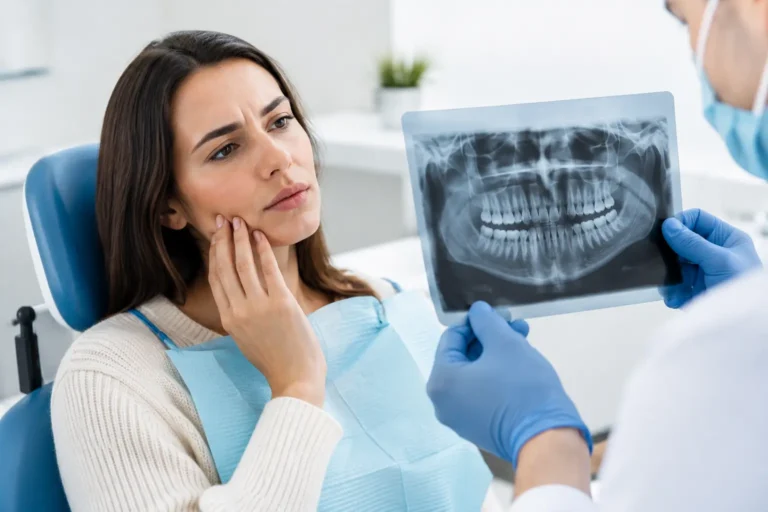
A recommendation for grafting should be based on more than a quick visual assessment. Conventional X-rays can show useful information, but a CBCT scan, which provides a three-dimensional view, is often used when planning complex implant treatment or evaluating bone volume near vital structures such as the sinus or nerve canal.
Before consenting, request copies of the materials used to create the plan. You should have access to your X-rays or CBCT images, periodontal charting if gum disease is involved, clinical photos when available, the written treatment plan, and an itemized cost estimate. If the tooth has not yet been removed, ask whether the prognosis of that tooth was evaluated and documented.
A graft may be appropriate, but the quality of the decision depends on the diagnosis underneath it. Is the tooth truly non-restorable? Is active gum disease controlled? Is the planned implant position prosthetically sound, meaning it will support a functional, cleanable crown? These questions matter as much as the graft itself.
Questions to ask before you consent
You do not need to become a dental surgeon to make a careful decision. You do need answers that are specific to your mouth and your treatment goals. Ask why the graft is recommended, what the X-ray or scan shows, and what could happen if you decline or delay it.
Also ask whether there is enough bone for an implant without grafting, whether another tooth-replacement option could avoid surgery, and whether the graft is being recommended to preserve future options rather than because an implant is immediately required. A bridge or removable option may be less invasive in some situations, though each has its own trade-offs.
If the plan includes extraction, grafting, an implant, an abutment, and a crown, ask for the full sequence and total expected cost. Separate the clinical question from the financial one: a procedure can be clinically sensible and still require a thoughtful discussion about budget, timing, and alternatives.
Risks and practical trade-offs
Dental bone grafts are commonly performed, but they are still surgical procedures. Potential issues include pain, swelling, bleeding, infection, graft exposure, delayed healing, and a graft that does not produce enough usable bone for the next stage. Larger procedures can involve more recovery time and greater complexity.
Smoking and vaping can raise the risk of complications and may affect implant success. Poorly controlled diabetes, untreated periodontal disease, certain medications, and inconsistent home care can also change the risk profile. Your dentist or specialist should review your health history rather than treating the graft as a stand-alone procedure.
There is also a real trade-off between preserving options and avoiding unnecessary treatment. A socket graft after extraction may make a future implant easier, yet not every patient plans to replace every missing tooth with an implant. The value of grafting depends partly on your long-term goals, not just what is technically possible.
When an independent review can help
Consider getting another professional perspective when a graft was recommended after a brief appointment, when two offices gave different recommendations, or when the total plan feels difficult to understand. This is especially useful if the proposed care includes extensive grafting, sinus surgery, multiple implants, or a high-cost full-mouth plan.
An independent review cannot replace an in-person examination or perform surgery. It can, however, help you understand whether the records support the diagnosis, whether the proposed sequence is consistent with the findings, and what questions should be answered before you commit. Second Opinion in Dentistry provides written reviews by licensed dental professionals without selling the procedures being evaluated, so the focus stays on clarity rather than treatment sales.
A clear next step
Do not let pressure determine the pace of a decision that may affect your health, time, and budget for years. Gather your images, treatment plan, and estimate, then make sure the recommendation explains the problem, the proposed solution, the alternatives, and the total commitment. Clear answers are a reasonable thing to expect before surgery.