

Best Records for Dental Review Before You Decide
See the best records for dental review, including X-rays, treatment plans, photos, and estimates, to get clear independent answers before any treatment.
A treatment plan can look final when it arrives as a printed estimate with unfamiliar procedure codes and a large total at the bottom. But a recommendation is only as clear as the records behind it. Before you agree to crowns, implants, root canals, extractions, or extensive restorative work, gathering the best records for dental review gives an independent dentist the evidence needed to assess what has been recommended and why.
You do not need to know how to read an X-ray or identify every dental term. Your role is simply to collect what your dental office used to make its recommendation. Clear records help a reviewer evaluate whether the proposed treatment appears necessary, whether the scope matches the findings, and whether reasonable alternatives deserve discussion.
What makes a dental record useful for review?
The most useful records show both the clinical evidence and the proposed solution. An X-ray may reveal decay, bone loss, infection, or an issue around an existing restoration. A treatment plan explains what your dentist recommends doing about it. Photographs and a cost estimate can add context that an X-ray alone cannot provide.
Quality matters, but perfection is not required. A slightly imperfect photo may still help confirm the location of a chipped tooth or worn crown. What matters most is that records are recent, complete enough to understand the issue, and legible. If your office sent materials through a patient portal, download the original files whenever possible rather than taking screenshots of a screen.
Records from the last 6 to 12 months are often most relevant. However, older X-rays can be valuable when the question is whether a condition has changed over time. For example, a previous image may help show whether a dark area near a tooth root is stable, improving, or progressing.
The best records for dental review
Dental X-rays and imaging
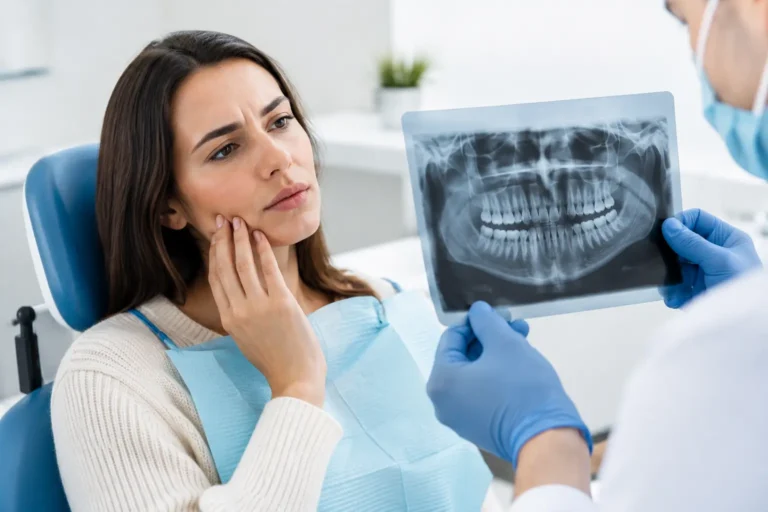
X-rays are usually the foundation of a meaningful review. They allow a licensed dental professional to assess areas that cannot be seen during a video call or in a standard smile photo, including spaces between teeth, the roots, surrounding bone, and possible infection.
Send every image connected to the recommendation, not only the one your dentist pointed out. A full series, bitewing X-rays, periapical images, and panoramic X-rays can each answer different questions. Cone beam CT scans can be especially relevant for implant planning, surgical extractions, sinus concerns, impacted teeth, complex root canal cases, and significant bone loss.
Ask for the original digital files or a clear PDF export. Avoid photographing X-rays displayed on a computer monitor if you can. Glare, poor contrast, and screen patterns can hide details that matter. If photographs of a screen are all you have, send them anyway, but let the reviewer know they are not original files.
The written treatment plan
A treatment plan turns clinical findings into a proposed course of care. It should identify each recommended procedure, the tooth number or location, and, ideally, the reason for the recommendation. This may include terms such as crown, filling, root canal, implant, bridge, extraction, periodontal scaling, grafting, or night guard.
Upload every page, even if some pages appear repetitive. A comprehensive plan may reveal the sequence of treatment, whether work is categorized as urgent or elective, and whether the recommendation involves one isolated issue or a full-mouth approach. That distinction can affect the questions worth asking.
If the plan is verbal, write down what you remember as soon as possible. Include which teeth were discussed, what the dentist said was urgent, whether alternatives were mentioned, and what you were told could happen if you wait. A written note is not a replacement for clinical records, but it gives the reviewer important context.
The cost estimate and insurance information
An estimate does not establish whether treatment is clinically necessary, but it is highly relevant to your decision. It shows the financial scope of the recommendation, the procedure codes used, anticipated insurance coverage, and your expected out-of-pocket cost.
Send the full estimate, including pages that show insurance adjustments or exclusions. A reviewer can help you understand whether the proposed treatment is broad, staged, or built around a particular material or approach. They cannot promise what your insurance plan will pay, but knowing the financial stakes helps focus the review on the decisions that matter most to you.
If you have been presented with multiple options, include all versions. A choice between a crown and a large filling, an implant and a bridge, or treatment now versus monitoring may involve different clinical trade-offs. An independent review should address those trade-offs clearly, not simply label one option right or wrong.
Intraoral and facial photographs
Photos are especially useful for visible concerns: chipped teeth, cracks, broken restorations, gum recession, swelling, discoloration, worn enamel, cosmetic concerns, and the condition of crowns or bridges. They can also help connect an X-ray finding to what is visible in the mouth.
Use good lighting and take photos from several angles if possible. For a specific tooth, include one close photo and one wider photo that shows its position among nearby teeth. If there is swelling, a sore, or a lump, photograph the area clearly and note when you first noticed it.
Photos cannot diagnose every problem. A crack may be invisible, and pain often has no visible sign. Still, when paired with X-rays and a treatment plan, they can make a review more complete.
Clinical notes, referral letters, and previous records
Supporting documents can be the difference between a general opinion and a well-grounded one. Helpful examples include periodontal charting, probing depths, endodontic test results, referral letters, prior treatment records, and notes from a specialist consultation.
These documents are particularly valuable if you have received conflicting recommendations. A periodontist may focus on bone and gum health, while a general dentist may focus on restoring damaged teeth. Neither perspective is automatically wrong, but an independent reviewer needs the underlying findings to explain where the recommendations align or differ.
Include a brief symptom history, too. Describe pain, sensitivity, pressure, bleeding, mobility, trouble chewing, previous trauma, or changes in symptoms. Note whether discomfort is constant, triggered by hot or cold foods, or occurs when biting. Specific details are more useful than simply saying a tooth “hurts.”
How to request records from your dental office
You have a right to request copies of your dental records. Keep the request simple and specific: ask for digital copies of all recent X-rays, the treatment plan, clinical notes related to the diagnosis, periodontal charting if applicable, photographs, and the cost estimate.
Most offices can provide records through a secure portal, encrypted email, or downloadable files. There may be a reasonable copying fee, and a practice may need time to prepare the files. If timing matters because treatment has been described as urgent, say so in your request.
Do not let an uncomfortable conversation stop you from asking. Requesting records is a normal part of managing your health care. It does not mean you are accusing your dentist of doing anything wrong. It means you want to make an informed decision before accepting treatment.
When fewer records may still be enough
Some questions can be reviewed with a focused set of materials. If you are deciding whether a single tooth needs a crown, one or two clear X-rays, a photo, the treatment recommendation, and your symptoms may be enough to begin. For a larger implant or full-mouth plan, more complete imaging, periodontal information, prior records, and every estimate are usually more appropriate.
A remote review also has limits. No dentist reviewing records online can perform a hands-on examination, test a tooth’s response, measure a pocket directly, or treat an active emergency. Severe swelling, facial swelling, fever, difficulty swallowing, uncontrolled bleeding, or trouble breathing needs immediate in-person care.
For non-emergency decisions, an independent written review can help separate what is clearly supported by the records from what needs more evidence or a local examination. Second Opinion in Dentistry provides that perspective without performing the procedures under review, selling treatment, or benefiting from which option you choose.
Before you commit to a costly plan, ask for the records, keep the originals organized, and give yourself room to understand the evidence. Clear answers are easier to get when the full picture is in front of the reviewer – and the final decision remains yours.