Are Online Opinions Reliable for Dental Care?
Are online opinions reliable? See how credentials, records, and financial independence can help you evaluate advice before costly dental treatment plans.
A treatment plan for several crowns, implants, or a root canal can arrive with a price tag large enough to change your plans for the year. When you search for reassurance, online opinions appear instantly: a forum post, a social media comment, an AI-generated answer, or a virtual dental review. But are online opinions reliable when the decision involves your health, your teeth, and thousands of dollars?
Sometimes. The quality of an online opinion depends far less on where it is delivered than on who is giving it, what information they reviewed, and whether they have anything to gain from the treatment you are considering. A thoughtful remote review based on your actual records is very different from general advice offered to strangers online.
Not All Online Opinions Are the Same
The phrase “online opinion” covers a wide range of advice. At one end are comments from people who have had similar dental work. Their experiences can help you prepare questions or understand recovery, but they cannot tell you whether your diagnosis is correct. Two patients can have similar symptoms and need very different care.
General dental content can also be useful for learning basic terms. It may explain what a crown does, why gum disease matters, or what is involved in an implant procedure. It cannot confirm whether you personally need that procedure without reviewing the clinical evidence.
A professional online second opinion is different. A licensed dentist reviews the materials behind the recommendation, such as X-rays, photographs, clinical notes, treatment plans, and estimates. The goal is not to replace an in-person examination or promise a diagnosis from incomplete information. It is to assess whether the proposed treatment appears supported by the records, whether reasonable alternatives may exist, and what questions deserve a clearer answer before you proceed.
Are Online Opinions Reliable When They Include Records?
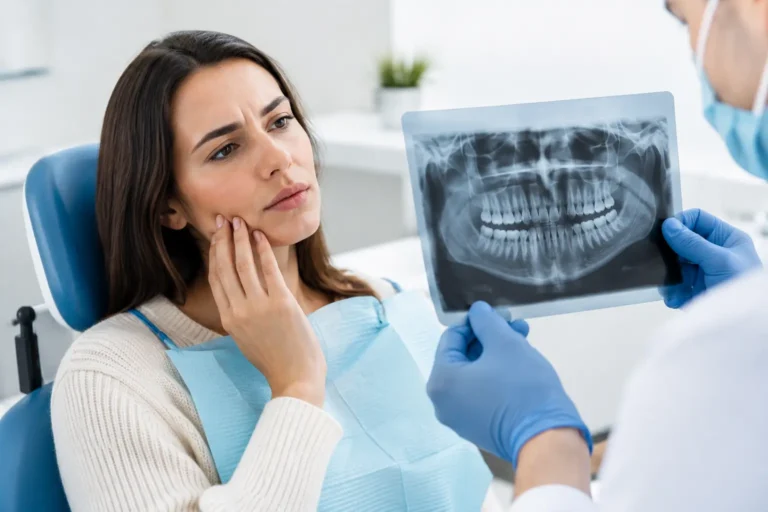
They can be, particularly for reviewing an existing treatment recommendation. Dental care is often documented through records that can be shared securely: digital X-rays, intraoral photos, periodontal charting, treatment notes, and itemized estimates. These materials give a reviewing clinician something concrete to evaluate instead of relying only on a patient’s memory of a brief appointment.
The reliability of the review increases when the reviewer has enough information to understand the full situation. For example, a single X-ray may show a concern around one tooth, but it may not show bite forces, gum measurements, symptoms, medical history, or the quality of older dental work. A responsible reviewer should identify those limits clearly rather than make absolute claims.
That transparency matters. A credible online opinion may say that a treatment appears reasonable based on the records provided, that additional images would help, or that an in-person assessment is necessary before a final decision. Clear limits are a sign of professional judgment, not a weak answer.
The records matter more than the platform
Video calls and polished websites can make a service feel trustworthy, but the central question is simpler: did a qualified clinician review the evidence? A detailed written opinion that refers to your images, findings, and proposed procedures carries more weight than a generic reassurance delivered over a video call.
Before relying on a remote dental opinion, look for a process that requests relevant documentation and explains why it is needed. You should know what the reviewer saw and what was not available for review. If you are asked to submit records, the platform should also explain how those files are handled and protected.
Independence Is Part of Reliability
Dental recommendations can involve an unavoidable tension. The same office that diagnoses a problem may also perform and bill for the treatment. Most dental professionals take patient care seriously, but the financial structure can still make patients feel uncertain, especially when the plan is extensive or urgent-sounding.
An independent review reduces that concern when the reviewer does not sell the procedures being evaluated and is not paid based on whether you move forward with treatment. That does not automatically make every independent opinion correct. It does mean the reviewer has less reason to expand the scope of care or steer you toward a particular procedure.
Ask a direct question: does this person or company profit if I choose treatment, a specific material, a specific provider, or a particular financing option? If the answer is no, the opinion may offer a more neutral starting point for your decision.
This is why a service such as Second Opinion in Dentistry focuses on reviewing the recommendation rather than providing treatment. The patient receives a written perspective from a licensed dental professional without upselling, no pressure to schedule a procedure, and no financial benefit tied to the result.
How to Judge an Online Dental Opinion
A reliable online opinion should make it easier to understand your next step, not make you more dependent on vague claims. Look for several practical signals before you share records or pay for a review.
First, verify professional credentials. The reviewer should be a licensed dentist, and the service should be clear about the qualifications relevant to your concern. Complex questions involving implants, root canals, periodontal disease, oral surgery, or orthodontics may require specialist-level expertise.
Second, expect a record-based review. If a service can confidently approve or reject major treatment without seeing your X-rays, photos, plan, or clinical documentation, be cautious. Good information produces a more useful opinion.
Third, assess the explanation. You should receive plain-language reasoning, not just a yes or no. A useful review explains what appears supported, what may be uncertain, what alternatives might be worth discussing, and what questions to take back to your treating dentist.
Finally, check for clarity on privacy, cost, and timing. You should know the price before purchase, understand how records are uploaded and stored, and have a defined turnaround expectation. For patients weighing costly care, waiting indefinitely for answers is not practical.
What an Online Opinion Cannot Do
Remote review has real value, but it has limits. No online reviewer can physically examine your teeth, test sensitivity, measure mobility firsthand, or immediately treat a swelling, infection, or injury. A virtual opinion should never delay urgent in-person care.
Contact a local dentist promptly if you have facial swelling, fever, uncontrolled bleeding, severe pain, trauma, trouble swallowing, or difficulty breathing. Those symptoms need direct clinical attention, not an online discussion.
Even in non-urgent cases, a second opinion should support your decision-making rather than replace a relationship with a treating dentist. You may decide the original recommendation is appropriate. You may learn that a less invasive option deserves discussion. Or you may find that the available records are incomplete and that another in-person exam is the sensible next step.
Use Online Advice to Ask Better Questions
The most valuable outcome is often not a simple verdict. It is a clearer conversation. After receiving a qualified review, you may be ready to ask why a tooth cannot be monitored, whether a restoration can be repaired rather than replaced, what happens if treatment is delayed, or why one option costs substantially more than another.
You do not need to become a dental expert to protect your interests. You need enough clear, honest information to consent to care with confidence. Save your treatment plan, request copies of your X-rays and estimates, and give yourself room to understand the recommendation before committing.
A reliable online opinion will not pressure you into a decision. It will help you see the evidence, understand the trade-offs, and choose your next step on your terms.