
How to Read Your Dental Treatment Plan (And What to Question)
Most patients leave the dentist’s office with a treatment plan they do not fully understand, a cost estimate that feels overwhelming, and a vague sense that they have agreed to something they are not sure about. You deserve better than that.
Understanding your dental treatment plan is not about second-guessing your dentist. It is about being an active participant in decisions that affect your health, your teeth, and your finances for years to come.
What Is a Dental Treatment Plan?
A dental treatment plan is a written document that outlines the procedures your dentist recommends, the sequence in which they should be performed, and the estimated cost of each. It is your roadmap for treatment — and it is negotiable.
Breaking Down the Most Common Items
Prophylaxis (cleaning): A routine professional cleaning. Usually recommended every six months for healthy adults.
Periapical or panoramic X-rays: Diagnostic images that allow the dentist to see below the gum line and between teeth. Ask when your last set was taken before agreeing to new ones.
Composite restoration (filling): Treatment for a cavity. Some small cavities can be monitored before being filled.
Crown: A cap that covers a damaged or weakened tooth. Sometimes recommended prematurely for teeth that could be restored with a filling.
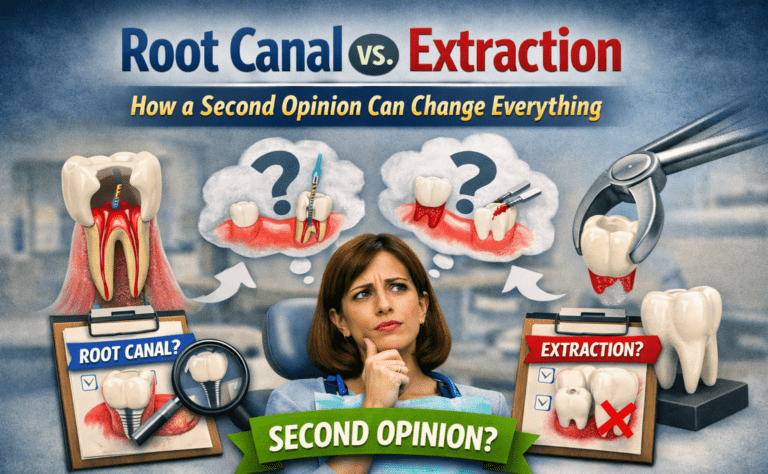
Root canal treatment: Removal of infected pulp tissue to save the tooth. Should be based on clinical symptoms and radiographic evidence.
Extraction: Removal of a tooth. Should generally be a last resort when the tooth cannot be saved.
Questions to Ask Before You Sign
Why is each procedure necessary right now? What happens if I delay this treatment by three to six months? Are there less invasive alternatives? Which items are urgent versus preventive? Can I see the X-rays or clinical notes that support this recommendation?
When to Get a Second Opinion
If the total cost is significant, if multiple irreversible procedures are recommended at once, or if you simply do not feel that your questions have been answered clearly, a second opinion is your right and your best protection.
Need help understanding your treatment plan? Submit it for an independent expert review at secondopinionindentistry.com.