
Root Canal vs. Extraction: How a Second Opinion Can Change Everything
Few dental diagnoses create as much anxiety as being told you need a root canal — or worse, that your tooth cannot be saved and needs to be extracted. Both procedures are significant, and both come with long-term consequences for your oral health. Before you commit to either, here is what you should know.
What Is the Difference Between a Root Canal and an Extraction?
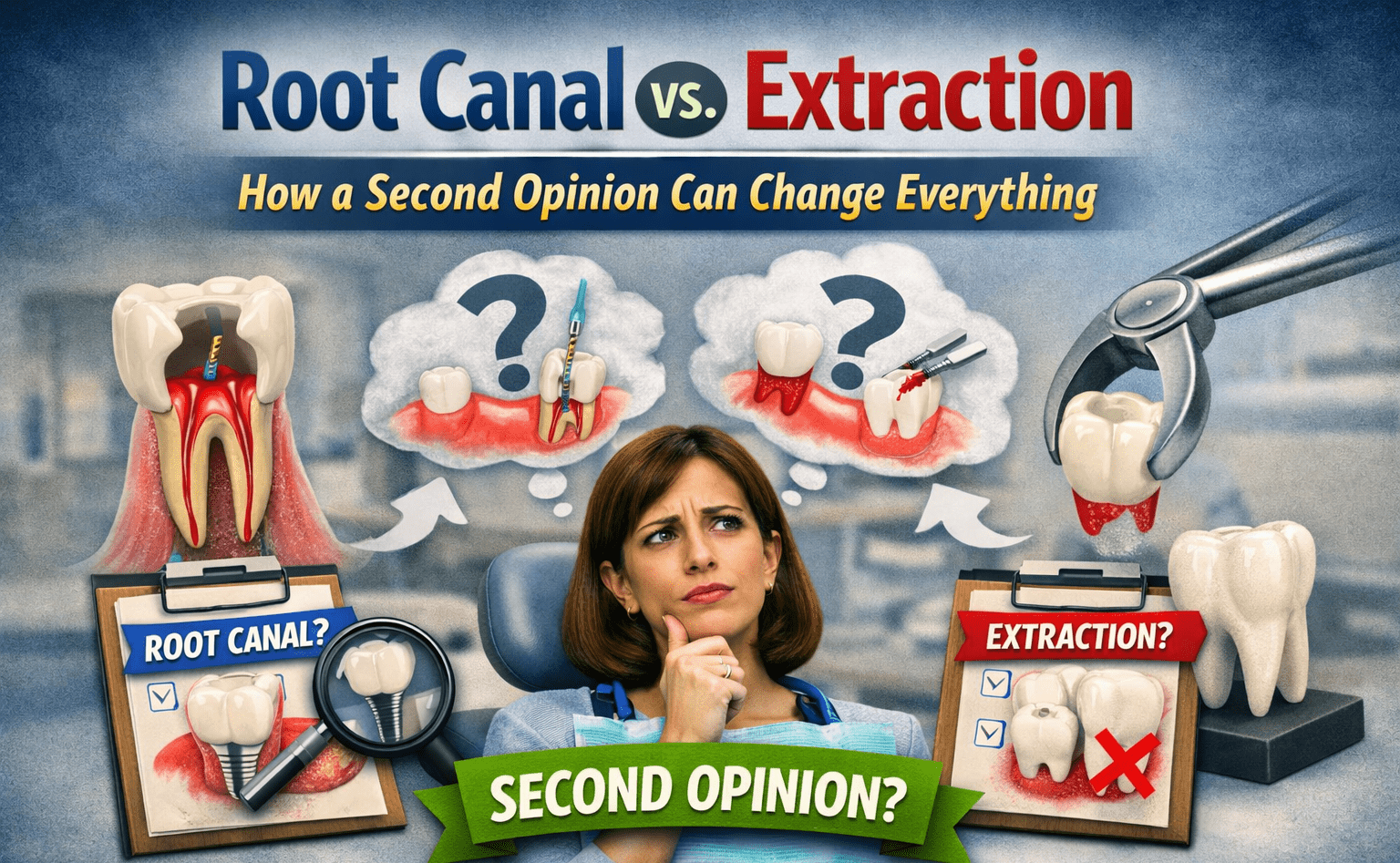
A root canal removes the infected pulp inside a tooth, allowing the tooth to be preserved and restored with a crown. An extraction removes the tooth entirely, which then requires a replacement solution such as an implant, bridge, or partial denture.
Root canals have a reputation for being painful, but in reality the procedure itself is no more uncomfortable than a routine filling. The pain people associate with root canals is usually the pain of the infection before treatment, not the treatment itself.
Why a Second Opinion Matters Here
The decision between saving a tooth and removing it is not always clear-cut. It depends on factors like the extent of the infection, the health of the surrounding bone, the remaining tooth structure, and your overall oral health. Different dentists may interpret the same X-ray differently.
Studies suggest that a significant percentage of recommended extractions could have been avoided with proper endodontic treatment. At the same time, some teeth that dentists attempt to save through root canals ultimately fail and require extraction anyway.
An independent specialist — particularly an endodontist or prosthodontist with no financial interest in your decision — can review your imaging and give you an honest assessment of your options, including the long-term prognosis for each.
What to Bring to a Second Opinion
To get the most accurate second opinion, you should provide: recent dental X-rays (panoramic and periapical views of the affected tooth), your current dentist’s written treatment plan or cost estimate, a brief description of your symptoms and how long you have had them, and any previous dental records related to the tooth in question.
The Financial Side
Root canal treatment followed by a crown typically costs more upfront than an extraction alone. However, when you factor in the cost of the implant or bridge needed to replace an extracted tooth, extraction is rarely the cheaper option in the long run. A second opinion can help you understand the true cost and value of each path before you commit. Not sure which option is right for you? Submit your case at secondopinionindentistry.com for an independent review.