What an Online Dental Second Opinion Can Tell You
Learn what an online dental second opinion reviews, what to upload, what it can clarify, and when an independent expert review can protect you from costs.
A treatment plan for several crowns, a root canal, implants, or full-mouth work can arrive with a price tag in the thousands. You may have been told the work is urgent, yet still feel unclear about what the X-rays actually show, whether every procedure is necessary, or what alternatives exist. An online dental second opinion gives you a way to ask those questions before you commit.
The goal is not to undermine a dentist or delay care that is genuinely needed. It is to give you a qualified, financially independent review of the diagnosis, proposed treatment, records, and estimate. When the reviewer does not perform or sell the treatment being evaluated, the advice can stay focused on your clinical needs rather than a procedure schedule.
What an Online Dental Second Opinion Reviews
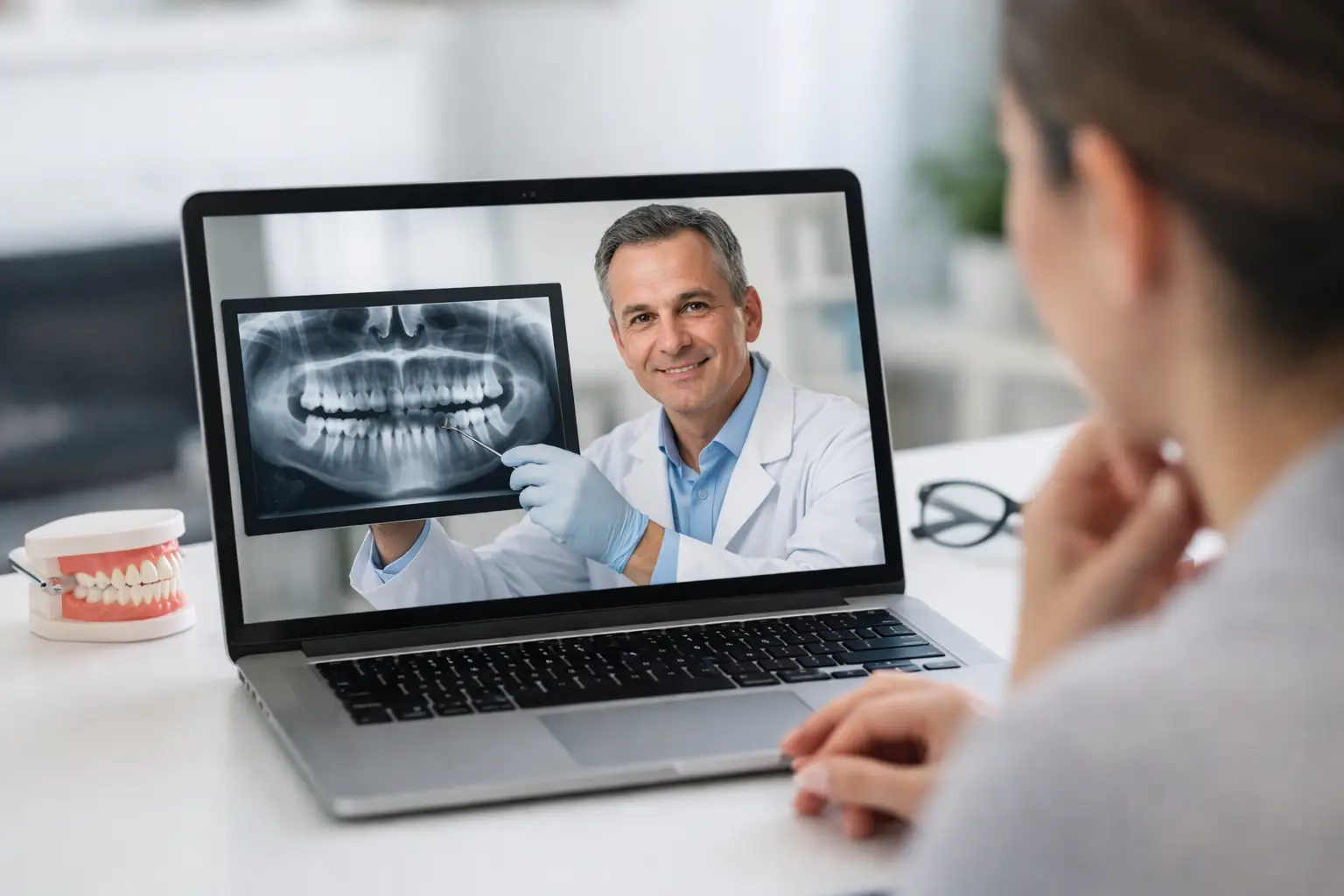
A meaningful second opinion starts with the same evidence that informed your original recommendation. Depending on the plan, a licensed dentist or specialist can review your dental X-rays, photos, clinical notes, periodontal charting, treatment plan, and cost estimate. They compare the stated diagnosis with the available records and explain whether the recommendation appears supported.
That review can answer practical questions that are hard to resolve in a short appointment. Is the tooth likely restorable, or is extraction the more predictable option? Does a crown appear necessary now, or could a more conservative restoration be reasonable? Is an implant the only sound replacement option, or might a bridge or partial denture also deserve discussion? If multiple teeth are included in a plan, are they all equally urgent?
A good written opinion should separate what is clearly visible in the records from what cannot be confirmed remotely. Dental decisions are not always black and white. X-rays have limits, photos can miss details, and some symptoms require an in-person exam. Clear advice acknowledges that uncertainty instead of making promises the records cannot support.
Why Independence Changes the Conversation
Most treating dentists want to provide appropriate care. Still, a practice that performs procedures is also paid when those procedures are accepted. That does not automatically make a recommendation wrong, but it can leave patients wondering whether they are hearing the full range of options.
An independent reviewer has a different role. They do not place implants, prepare crowns, perform root canals, or collect payment for the treatment under review. That structure matters when you are considering costly or irreversible care. It allows the reviewer to focus on necessity, sequencing, alternatives, risk, and whether the proposed fees are understandable for the scope of work.
The value is often clarity, not necessarily a completely different answer. You may learn that your dentist’s plan is well-supported and that moving ahead makes sense. That confirmation can replace hesitation with confidence. Or you may learn that additional diagnostic records, a specialist evaluation, staged treatment, or a more conservative option should be discussed before you proceed.
When a Second Opinion Is Worth Getting
An independent review is especially useful when a recommendation is expensive, complex, permanent, or presented under pressure. If a clinic recommends multiple crowns, implants, extractions, veneers, extensive gum treatment, or a full-mouth reconstruction, it is reasonable to slow down long enough to understand the evidence.
It can also help when two dentists have given conflicting recommendations. One dentist may suggest saving a tooth with a root canal and crown while another recommends extraction and an implant. The right answer depends on factors such as remaining tooth structure, bone levels, cracks, infection, gum health, bite forces, and your long-term priorities. A remote reviewer can explain why the recommendations may differ and what questions should guide your next appointment.
Cost is another valid reason to seek clarity. A treatment estimate should show what is included, but dental plans can bundle procedures, use unfamiliar terms, or leave out future steps. An online review cannot set prices for every market or predict your insurance payment. It can, however, help you understand whether the proposed scope matches the diagnosis and identify items you should ask the provider to explain.
There are times not to wait for an online review. Facial swelling, fever, uncontrolled bleeding, trauma, difficulty breathing or swallowing, or severe escalating pain may require urgent in-person dental or medical care. A remote opinion is not emergency treatment and cannot replace a hands-on examination when one is clinically necessary.
What to Upload for a Useful Review
The more complete the record, the more specific the opinion can be. Start with the treatment plan and written estimate you received. These documents show the proposed procedures, teeth involved, timelines, and fees.
If available, include:
- Recent X-rays, such as bitewings, periapical images, a panoramic X-ray, or CBCT images and reports
- Clear photos of the teeth or area of concern, especially if there is visible damage, swelling, or a failing restoration
- Notes from the treating dentist, specialist reports, periodontal charting, or prior treatment records
- A brief description of your symptoms, concerns, dental history, and relevant health conditions
- Questions you want answered, including whether you are deciding between specific treatment options
Do not worry if you do not have every item. Many patients begin with a treatment plan, estimate, and available X-rays. The reviewer can explain when the available evidence is sufficient for a focused assessment and when more records would make the conclusion stronger.
When taking photos, use bright light and keep the image as steady and close as possible. Photos are helpful context, but they do not replace diagnostic X-rays or an in-person examination. If a clinic holds your X-rays, you can request copies of your records. They are part of your healthcare information, and having them makes it easier to seek an informed review.
What You Receive and How Long It Takes
A quality online dental second opinion should leave you with something you can use, not vague reassurance. The written review should address the diagnosis, whether the suggested treatment appears appropriate based on the submitted materials, meaningful alternatives, concerns or limitations in the records, and questions to bring back to your treating dentist.
At Second Opinion in Dentistry, reviews are completed by licensed dental professionals and delivered online within 48 business hours. Options range from a focused review of a single treatment recommendation to more comprehensive analysis with additional X-ray and documentation review. For patients facing larger or more complicated decisions, an optional 45-minute live specialist consultation provides time to discuss the findings directly.
Pricing should be transparent before you submit. A fixed-price review starting at $49 is fundamentally different from booking another consultation that may lead immediately into a sales conversation. The purpose is not to push you toward or away from treatment. It is to help you understand what the records support so you can decide with less pressure.
Privacy matters, too. Dental X-rays, photographs, and treatment plans are personal health information. Look for a service that uses encrypted uploads and handles records confidentially. An online process should make expert review more accessible without asking you to sacrifice control of your information.
How to Use the Opinion at Your Next Appointment
A second opinion is most useful when it improves the conversation with your treating dentist. Bring the written findings and ask direct, respectful questions. If an alternative was identified, ask whether it is appropriate in your case and why the original plan was preferred. If more diagnostics were recommended, ask what those records could change.
You can also ask about timing. Some treatment needs prompt attention, while other work can be monitored, staged, or prioritized based on symptoms and risk. Knowing the difference helps you plan financially without ignoring legitimate health needs.
Your treating dentist remains responsible for examining you and providing any care. A remote reviewer cannot diagnose every condition from records alone or take responsibility for a procedure they do not perform. But an independent assessment can help you recognize where the evidence is strong, where uncertainty remains, and what deserves a clearer answer.
When the decision affects your health, your comfort, and a significant amount of money, asking for another professional perspective is not being difficult. It is a reasonable way to protect your choices before treatment begins.