Alternatives to Dental Implants That May Work
Considering alternatives to dental implant treatment? Learn which tooth-replacement options may fit your health, budget, timeline, and long-term goals.
A recommendation for an implant can feel like the only path forward, especially when it comes with a large estimate and a request to schedule surgery quickly. But alternatives to dental implant treatment do exist. The right option depends on which tooth is missing, the condition of nearby teeth and bone, your bite, your health history, and what you want the result to accomplish.
An implant can be an excellent treatment for many people. It is also surgery, it takes time, and it is not automatically necessary in every situation. Before committing, you deserve a clear explanation of the reasonable choices, the trade-offs, and what could happen if you wait.
Alternatives to Dental Implants: Start With the Gap
Replacing a missing tooth is not always equally urgent. A missing front tooth usually affects appearance, speech, and confidence right away. A missing back tooth may affect chewing or allow neighboring teeth to drift, but the impact varies by location and by your existing bite. If the missing tooth is a wisdom tooth, replacement is usually not needed.
The most useful question is not simply, “What can replace this tooth?” It is, “What problem are we trying to solve?” That problem may be restoring chewing, preventing movement, improving appearance, protecting a weakened bite, or avoiding further procedures. Each goal can point toward a different treatment plan.
Leaving the space untreated
In some cases, monitoring the space is a reasonable option. This is more likely when the missing tooth is far back, your bite remains stable, you can chew comfortably, and the opposing tooth is unlikely to over-erupt into the space. It may also make sense when you need time to address other health or financial priorities.
The trade-off is that teeth can shift over time, the opposing tooth may move, and chewing forces may become uneven. These changes are not guaranteed, and they do not happen on the same timeline for everyone. A dentist should explain the specific risks in your mouth rather than using a generic warning that every missing tooth must be replaced immediately.
A removable partial denture
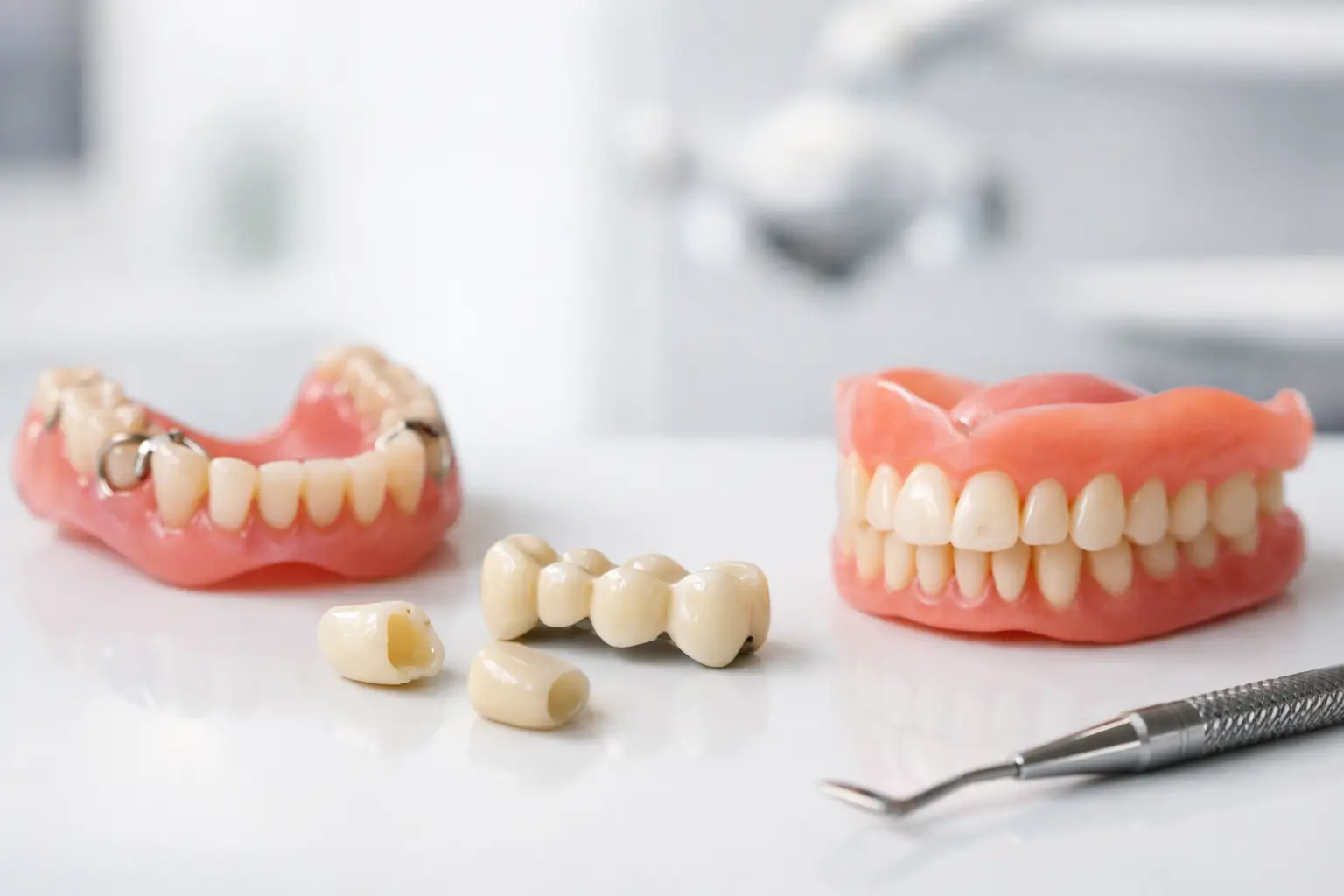
A removable partial denture replaces one or more missing teeth with a custom appliance that clips around remaining teeth or rests against the gums. It is often less expensive upfront than an implant-supported restoration and can be made without surgery.
This option can be particularly practical when several teeth are missing, when bone volume is limited, or when an implant is not advisable because of medical factors. It can also serve as a temporary solution while you decide on longer-term treatment.
Partial dentures have real limitations. They require daily removal and cleaning, may feel bulky at first, and can move slightly while eating. Clasps may be visible depending on their location. Over time, the fit can change as the gum and bone ridge change, so adjustments or replacement may be needed.
A conventional dental bridge
A traditional bridge fills a gap by placing crowns on the teeth next to it and attaching a replacement tooth between them. Unlike a removable partial, it is fixed in place. For some patients, it provides a natural-looking and predictable way to restore appearance and chewing without implant surgery.
A bridge may be especially worth considering when the teeth beside the gap already need crowns because of large fillings, fractures, or decay. In that situation, preparing those teeth may be part of their needed treatment anyway.
The central trade-off is that a conventional bridge changes neighboring teeth. Healthy teeth must be reshaped to support the crowns, and future decay or failure in one supporting tooth can affect the entire bridge. Bridges also require careful cleaning beneath the replacement tooth. Their value depends heavily on the strength, health, and long-term outlook of the supporting teeth.
A resin-bonded bridge
A resin-bonded bridge, sometimes called a Maryland bridge, is a conservative fixed option most often used to replace a front tooth. It typically has a replacement tooth attached to a thin wing bonded to the back of a neighboring tooth. It usually requires much less alteration of healthy tooth structure than a conventional bridge.
This can be a strong option for the right case, particularly when appearance matters and the bite does not place heavy force on the bonded wing. It is often not ideal for high-pressure chewing areas or for people who grind or clench their teeth heavily.
The main downside is the possibility of debonding. It may come loose and need to be rebonded, although that does not necessarily mean the treatment has failed permanently. Ask whether your bite, tooth position, and enamel quality make this approach realistic.
An orthodontic solution
Sometimes the best alternative is not to place a replacement tooth at all, but to move teeth with orthodontic treatment. Braces or clear aligners may close a space, redistribute spacing, or position teeth so that a future restoration is more conservative and stable.
This approach is most relevant when the space is small, teeth have already shifted, or the missing tooth is part of a broader bite issue. It takes planning and patience, and it is not appropriate for every gap. Still, it can avoid surgery or reduce the complexity of restorative treatment.
A tooth-supported temporary option
If a tooth was recently removed, you may not need to make a permanent decision immediately. A temporary removable appliance, temporary bridge, or bonded temporary tooth can restore appearance while the area heals and you gather more information.
A temporary solution is not a way to ignore the decision. It is a way to make it thoughtfully. Healing can change the gum contour and reveal whether additional bone treatment, orthodontics, or a different restoration would be beneficial. For a visible front tooth, a temporary option can reduce pressure to accept a permanent plan before you are ready.
How to Compare Alternatives to a Dental Implant
Cost matters, but the lowest initial estimate is not always the lowest long-term cost. A bridge may cost less than an implant at the start but involve future work on supporting teeth. A partial denture may be the most accessible option now but need periodic adjustments and replacement. An implant may have a higher initial cost, along with possible grafting, surgical, and restoration fees, but it does not require preparing adjacent teeth.
Ask for a written estimate that separates each phase of care. If an implant is proposed, find out whether the estimate includes imaging, extraction, bone grafting, the surgical implant placement, the abutment, the final crown, and follow-up visits. If a bridge is proposed, ask whether the supporting teeth need treatment independently or are being prepared solely to support the bridge.
Timing is another meaningful difference. A bridge may be completed relatively quickly once the supporting teeth are ready. A removable partial can also be delivered on a shorter timeline. Implant treatment often takes months, particularly if healing or bone grafting is needed first. There is no universally better timeline – only the one that fits your clinical needs and priorities.
Your medical history also matters. Conditions that affect healing, uncontrolled diabetes, smoking or nicotine use, certain medications, gum disease, clenching, and inadequate bone can all change the predictability or sequence of implant treatment. These factors do not always rule out implants. They do mean the recommendation should be individualized and clearly explained.
Questions to Ask Before You Decide
A treatment recommendation should be able to stand up to calm, specific questions. Ask what happens if you delay treatment for six months or a year. Ask whether the teeth next to the space are healthy enough to support a bridge, whether a resin-bonded bridge is possible, and whether leaving the space is clinically reasonable.
Also ask what the X-rays show about bone level, infection, neighboring roots, and the tooth opposite the gap. If an extraction has been recommended before an implant, ask whether the tooth is truly non-restorable and what evidence supports that conclusion. In some cases, saving a natural tooth with restorative or root canal treatment may be worth considering before moving to extraction and replacement.
You do not need to decide based only on a brief appointment or a sales-style presentation. Request copies of your X-rays, treatment plan, clinical notes, and itemized estimate. These records give you a concrete basis for comparing recommendations.
For a major decision, an independent review can help distinguish between a necessary procedure, a reasonable preference, and a plan with alternatives that deserve discussion. Second Opinion in Dentistry provides written reviews from licensed dental professionals without performing or selling the treatment being evaluated. That separation matters when you are weighing surgery, cost, and long-term consequences.
The best choice is the one you understand: a plan that fits your mouth, your health, your budget, and your comfort with the trade-offs. Clear answers now can protect both your teeth and your options later.