
Why a Dentist Recommends a Crown for Your Tooth
Learn why dentist recommends crown treatment, when it is necessary, what alternatives may work, and how to seek an unbiased review before deciding today.
A crown recommendation can feel sudden, especially when it follows a routine visit and comes with a four-figure estimate. If you are wondering why dentist recommends crown treatment for a tooth that is not causing constant pain, the answer may be legitimate – but it should be specific. You deserve to know what the dentist sees, what risk the crown is meant to prevent, and whether a less extensive option could reasonably work.
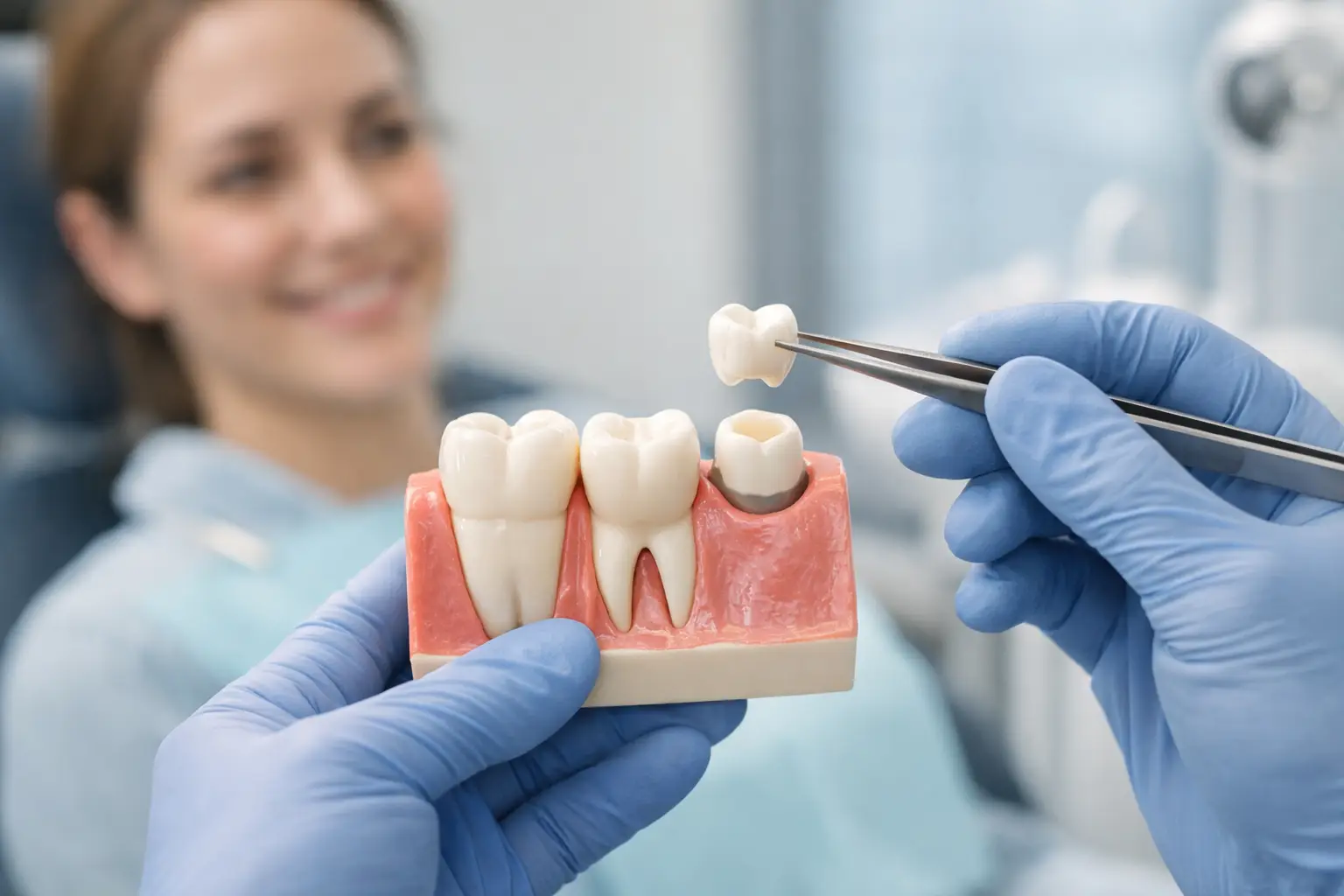
A dental crown is not automatically the right answer because a tooth has a filling, a cavity, or prior treatment. It is a restoration designed to cover and protect the visible portion of a tooth. The decision should be based on the tooth’s remaining structure, cracks, bite forces, decay risk, symptoms, X-rays, and long-term prognosis. A clear explanation matters because placing a crown permanently changes the tooth.
Why a Dentist Recommends a Crown
Dentists often recommend crowns to keep a compromised tooth functional rather than waiting for it to break or become infected. In many cases, that preventive approach can save a patient from a more complex and costly problem later. Still, “preventive” should not mean vague. Your dentist should be able to show you the evidence behind the recommendation.
The tooth has lost substantial structure
A large cavity, a failing old filling, or repeated dental work can leave thin walls of natural tooth structure. Fillings replace missing areas, but they do not always provide enough support when much of the tooth is gone. Back teeth take considerable pressure from chewing, and weakened cusps – the pointed parts of the chewing surface – can fracture.
A crown covers the tooth and redistributes biting forces. This may be recommended when a new filling would be so large that the remaining tooth could crack around it. The question is not simply whether there is decay. It is how much stable, healthy tooth remains after decay and old filling material are removed.
A crack is suspected or visible
Cracks range from minor surface lines to deeper fractures that threaten the tooth. Some are visible in photographs or during examination; others are suspected because of sharp pain when biting, sensitivity when pressure is released, or a pattern seen around an old restoration.
A crown can hold the tooth together and reduce the chance that a crack spreads. But crack diagnosis has limits. Not every painful tooth has a crack, and not every crack requires the same treatment. A shallow crack may be monitored, while a deep crack extending below the gumline may have a poor prognosis even with a crown. Ask what evidence supports the diagnosis and whether the crack’s extent can be determined before treatment begins.
The tooth has had root canal treatment
Root canal treatment removes infected or inflamed tissue from inside a tooth. Afterward, the tooth may have less remaining structure due to the original decay, fracture, or access opening needed for treatment. Molars and premolars are particularly exposed to heavy chewing forces, so crowns are commonly recommended after root canal treatment.
That does not mean every root canal-treated tooth needs an immediate crown. Front teeth with limited structure loss may sometimes be restored differently. The right approach depends on the tooth type, the amount of intact tooth, your bite, and whether the tooth already has a large restoration. The dentist should explain why your specific tooth falls on one side of that decision.
An old crown or filling is failing
Crowns do not last forever. Recurrent decay at the edge of a crown, a broken crown, an open margin, or a damaged supporting tooth may justify replacement. Likewise, a large filling can leak, fracture, or develop decay underneath it.
Replacement may be appropriate, but it is reasonable to ask whether the concern is urgent. A stained margin is not always active decay, and an X-ray finding should be interpreted alongside an examination and symptoms. If a crown needs replacement, ask whether the tooth underneath has enough healthy structure for another crown and whether additional treatment, such as a buildup or root canal evaluation, may be needed.
The tooth needs to support a larger restoration
Crowns may be used to restore an implant, support certain bridge designs, or rebuild a severely worn or broken tooth. In these situations, the crown is part of a broader treatment plan. The quality of that plan depends on more than the crown material. Bite alignment, gum health, bone support, adjacent teeth, and the expected lifespan of the work all matter.
A Crown Is Not the Only Possible Treatment
A crown can be a strong and sensible treatment, but it involves trade-offs. The dentist must remove some tooth structure to create room for the crown. It also has a cost, may require temporary protection while a final crown is made, and can need replacement in the future.
Depending on the condition of the tooth, alternatives may include a smaller filling, an onlay or partial crown, bonding, monitoring, or treating the underlying issue first. An onlay covers one or more weakened cusps without surrounding the entire tooth. It can preserve more natural structure in the right case, although it is not suitable for every tooth or every pattern of damage.
Monitoring may be appropriate for a small crack without symptoms, early wear, or a questionable finding that does not yet justify irreversible treatment. But monitoring is not the same as ignoring a problem. It should include a clear follow-up plan and an understanding of what changes – pain, swelling, biting sensitivity, or visible fracture – should prompt faster care.
The best option depends on the clinical evidence. A responsible discussion should include the likely benefit of a crown, the risks of waiting, the limits of alternatives, and what could happen if the tooth worsens. No one should suggest that a crown is risk-free or guarantee that it will last a certain number of years.
What to Ask Before You Agree to a Crown
Before scheduling, ask your dentist to walk you through the records. A good conversation can be direct and practical:
- What specifically is wrong with this tooth: decay, a crack, a failing filling, fracture, or prior root canal treatment?
- Can you show me the X-ray, intraoral photo, or clinical finding that supports the crown?
- How much healthy tooth structure will remain after decay or old filling material is removed?
- Is an onlay, filling, or monitoring plan reasonable in my case? Why or why not?
- What is the risk of waiting three, six, or twelve months?
- Does this estimate include a buildup, temporary crown, root canal treatment, or other possible charges?
These questions do not challenge your dentist personally. They help you make an informed decision about irreversible treatment. If the answer is that the tooth could break without a crown, ask how likely that is, what makes your tooth vulnerable, and whether the risk is immediate or long-term.
When an Independent Review Can Help
A second opinion is especially useful when a crown is recommended as part of a larger plan, when you have received different recommendations from different offices, or when the explanation has felt rushed. It can also help when a tooth is not painful but is described as urgent, or when several crowns are proposed at once.
For a meaningful review, gather the treatment plan and estimate, recent X-rays, clinical photographs if available, and any notes about symptoms or prior treatment. These records can help a licensed dental professional assess whether the stated diagnosis appears supported, whether the scope of treatment is proportionate, and what questions should be clarified with your treating dentist.
Second Opinion in Dentistry provides written, independent reviews from licensed dental professionals without performing or selling the treatment being evaluated. That separation matters. A review cannot replace an in-person examination or manage an emergency, but it can give you a clear, financially neutral perspective before you commit.
Do Not Delay Care for Warning Signs
Some situations need prompt in-person attention regardless of whether a crown may eventually be needed. Contact a local dentist urgently if you have facial swelling, fever, uncontrolled pain, difficulty swallowing or breathing, a tooth that has fractured sharply, or signs of infection. A remote review is best used to clarify a non-emergency recommendation, not to delay urgent treatment.
A crown may be the most conservative way to preserve a weakened tooth, or it may be more treatment than the available evidence supports. The difference is found in the details: the condition of the tooth, the images, your symptoms, your bite, and the realistic alternatives. Ask to see the evidence, take the time you reasonably need, and choose a plan you understand without pressure.