Dentures Versus Implants: Which Is Right?
Comparing dentures versus implants? Learn what affects comfort, cost, bone health, and long-term value before you accept a treatment plan first.
A recommendation to remove teeth and replace them with a denture or implants can feel urgent, especially when the estimate reaches thousands of dollars. But dentures versus implants is not a simple choice between a lower-cost option and a premium one. The right path depends on which teeth are involved, the condition of the bone and gums, your health history, the timeline, and what the proposed treatment actually includes.
You deserve to understand those details before agreeing to irreversible treatment. A clear plan should explain what is being removed, why it cannot be saved, what replacement options are realistic, and what costs may arise later.
Dentures Versus Implants: The Core Difference
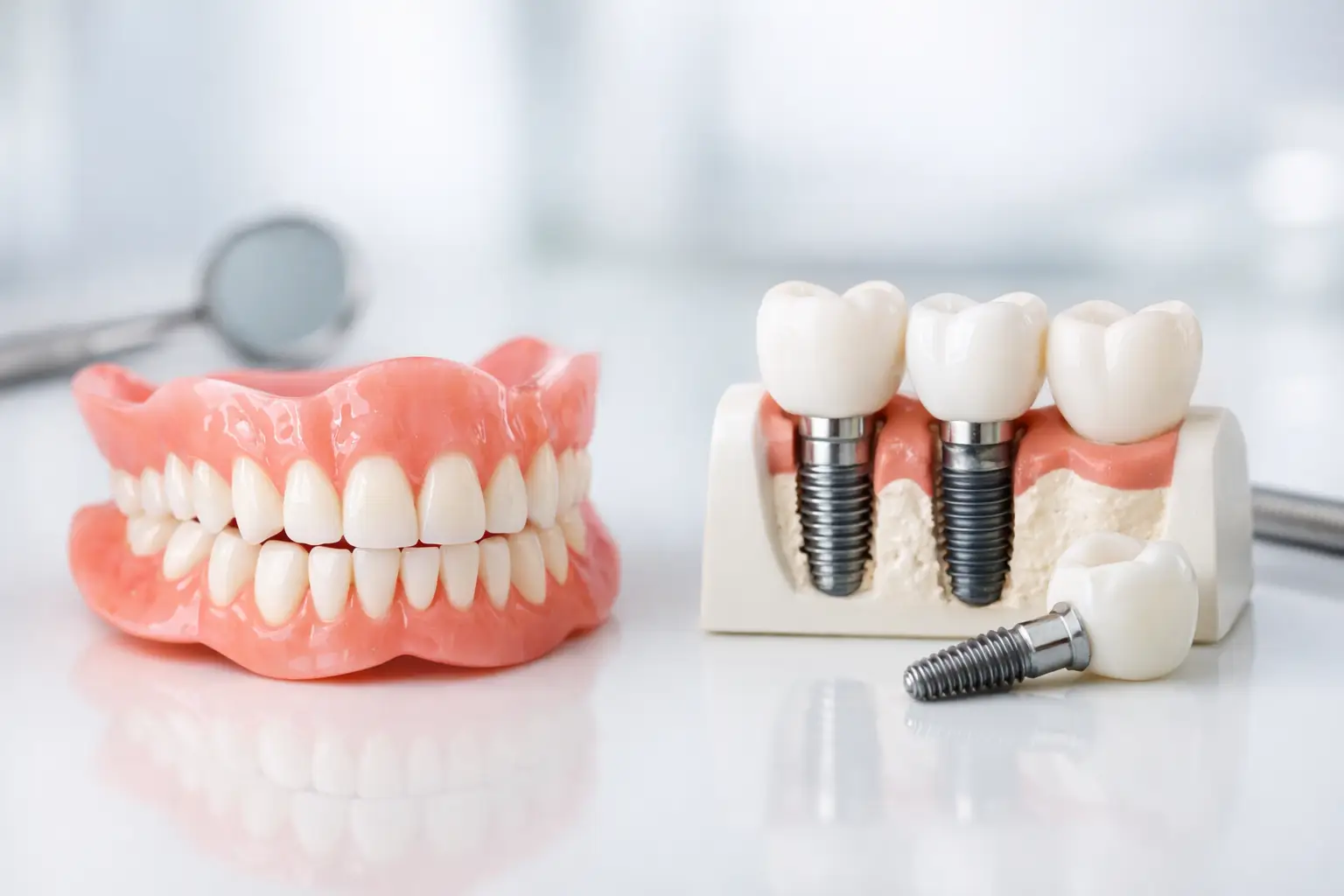
A denture is a removable appliance that replaces some or all missing teeth. A complete denture replaces all teeth in an upper or lower arch. A partial denture fills gaps when some natural teeth remain. Traditional dentures rest on the gums and are usually held in place through fit, suction, clasps, or adhesive.
Dental implants are small posts placed in the jawbone to support a crown, bridge, or denture. An implant can replace one missing tooth, several teeth, or help stabilize a full denture. Implant treatment is surgical, requires adequate bone and healing time, and often involves several stages.
The comparison becomes less straightforward when a plan includes implant-supported dentures. These are still dentures, but they attach to implants for greater retention. Some can be removed by the patient for cleaning, while others are fixed in place and removed only by the dental provider. Asking which type is being recommended matters because the daily experience, maintenance, and cost can differ substantially.
When Dentures May Be the Sensible Choice
Dentures remain a valid treatment option. They can restore appearance and basic chewing function without surgery, and they are generally less expensive upfront than implants. For someone who needs teeth replaced quickly, has limited bone volume, has medical conditions that make surgery more complicated, or simply does not want an implant procedure, a denture may be a reasonable fit.
A conventional denture can also serve as a temporary solution while you decide whether implant treatment is appropriate. In some cases, it is used during healing after extractions before a final restoration is made.
The trade-off is stability. Lower dentures, in particular, can move during eating or speaking because there is less surface area for suction. Even a well-made denture can require adjustments as gums and bone change shape. Some people adapt well; others find movement, sore spots, food trapping, or reduced chewing ability frustrating.
Ask whether the quoted denture is immediate or final. An immediate denture is placed on the day teeth are removed, but the mouth changes rapidly during healing. It may need relining, adjustment, or replacement within months. A final denture is often made after tissues have stabilized. If an estimate presents one price, confirm whether it covers both stages, adjustments, relines, and future repairs.
When Implants May Offer More Value
Implants can provide a more secure foundation for replacement teeth. A single implant with a crown can avoid altering neighboring teeth, while implant-supported dentures can greatly improve stability for people who struggle with a loose lower denture. Because implants transmit chewing forces into the jawbone, they may help preserve bone in the area around the implant.
That does not mean implants are automatically the best answer. Implant treatment can involve extractions, bone grafting, sinus procedures, surgical placement, healing periods, temporary teeth, final restorations, and ongoing maintenance. A proposal that says “full mouth implants” may refer to very different designs and levels of care.
For example, a removable overdenture retained by two implants is not the same as a fixed full-arch bridge supported by four or more implants. Both can be appropriate in the right circumstances, but they have different costs, hygiene needs, repair risks, and expectations for chewing and appearance.
Implants also need healthy conditions to succeed. Gum disease must be controlled, daily cleaning is essential, and smoking, uncontrolled diabetes, certain medications, teeth grinding, and other health factors can affect risk. No provider can promise a complication-free result. A responsible recommendation should discuss your individual risk factors rather than treating implants as a guaranteed upgrade.
Questions That Change the Financial Comparison
The initial price is only one part of the decision. Dentures often cost less at the start, but may need periodic relines, repairs, replacement teeth, or eventual replacement. Implant care has a higher upfront cost and may later involve professional maintenance, replacement of attachment components, repair of a denture or bridge, or treatment if an implant develops complications.
Before accepting either estimate, request an itemized treatment plan. It should identify diagnostic records, extractions, sedation if applicable, grafting, implants, temporary prosthetics, final teeth, laboratory fees, follow-up visits, and maintenance. If any part is described as “as needed,” ask what would trigger that charge and what range to expect.
It is also worth asking these practical questions in writing:
- Are any teeth being removed, and what evidence shows they are not predictably restorable?
- Is the recommendation for a conventional denture, an implant-retained denture, or a fixed implant bridge?
- Does the fee include temporary and final teeth, or only one stage?
- What happens if grafting, additional implants, or repairs are needed?
- What maintenance will be required each year, and what is not covered by any warranty?
These are not difficult questions. They are the questions that reveal whether you are comparing complete plans or comparing an entry-level quote with a more comprehensive one.
Do Not Skip the “Can This Tooth Be Saved?” Question
When a plan involves multiple extractions, the most consequential decision may not be denture versus implant. It may be whether each tooth truly needs to be removed.
Some teeth are clearly beyond predictable repair because of severe fracture, advanced decay, infection, or extensive bone loss. Others may have treatment options such as periodontal therapy, root canal treatment, a crown, or a partial restoration. Saving every tooth at any cost is not always wise, but removing teeth is permanent. Each extraction should have a clinical reason you can understand.
Be cautious with all-or-nothing language when you have not been shown the X-rays, photographs, gum measurements, and prognosis for individual teeth. A full-arch implant solution may be excellent for one person and unnecessarily aggressive for another. Similarly, a removable denture may be a practical choice, but it should not be presented as the only affordable option without discussing phased treatment or implant support where appropriate.
What Records Help You Get a Clearer Review
If the recommendation feels rushed, confusing, or costly, a second opinion can help you assess the proposed scope before treatment begins. The most useful records are the written treatment plan and estimate, recent X-rays, intraoral photographs if available, periodontal charting, and any notes explaining why teeth are considered unsalvageable.
A review should address the evidence behind the diagnosis, whether the proposed treatment appears reasonable, what alternatives may deserve discussion, and which questions to bring back to the treating office. It cannot replace an in-person examination or emergency care, but it can give you a calmer basis for a high-stakes conversation.
Second Opinion in Dentistry provides independent written reviews from licensed dental professionals without performing or selling the treatment being evaluated. That separation matters when you want the recommendation examined without pressure to accept a procedure.
Choosing Based on Your Priorities
The best option is often the one that balances clinical predictability with your actual life. If avoiding surgery and lowering upfront cost are your top priorities, dentures may be the better fit. If stability, chewing confidence, and a less removable-feeling solution matter most, implants or an implant-supported denture may justify a larger investment. If your situation is medically or financially complex, a phased approach may make more sense than committing to a full-mouth plan immediately.
You do not need to decide based on a sales presentation, a dramatic before-and-after photo, or fear that you will miss your only chance. Ask for the records, understand the alternatives, and give yourself enough room to choose care that feels clinically sound and financially clear.