
Full Mouth Rehabilitation: How to Make the Best Decision for Your Smile
Full mouth rehabilitation, also called full mouth reconstruction, is the most comprehensive category of dental treatment. It involves restoring or replacing most or all of the teeth in the upper and lower arches, and it can represent an investment of tens of thousands of dollars and months or years of treatment. For patients who truly need it, it is life-changing. For that reason, the decision deserves exceptional care.
What Full Mouth Rehabilitation Involves
Full mouth rehabilitation is not a single procedure. It is a coordinated plan that may include crowns, implants, bridges, veneers, inlays and onlays, gum treatment, orthodontic preparation, and bite adjustments — all designed to restore function, health, and aesthetics to a mouth that has experienced significant damage, wear, or tooth loss.
The treatment is typically planned and coordinated by a prosthodontist or an experienced restorative dentist, often in collaboration with specialists in implantology, periodontics, and oral surgery.
Who Actually Needs Full Mouth Rehabilitation
Full mouth rehabilitation is indicated for patients who have experienced significant tooth loss or are missing multiple teeth, severe wear from bruxism (teeth grinding) or acid erosion, extensive decay affecting multiple teeth, significant trauma or injury to the teeth and jaw, or bite problems that affect function and are contributing to ongoing damage.
Patients with primarily cosmetic concerns — who want a better-looking smile but have generally healthy teeth — may be better served by a more targeted cosmetic approach rather than a comprehensive reconstruction.
Evaluating a Full Mouth Rehabilitation Plan
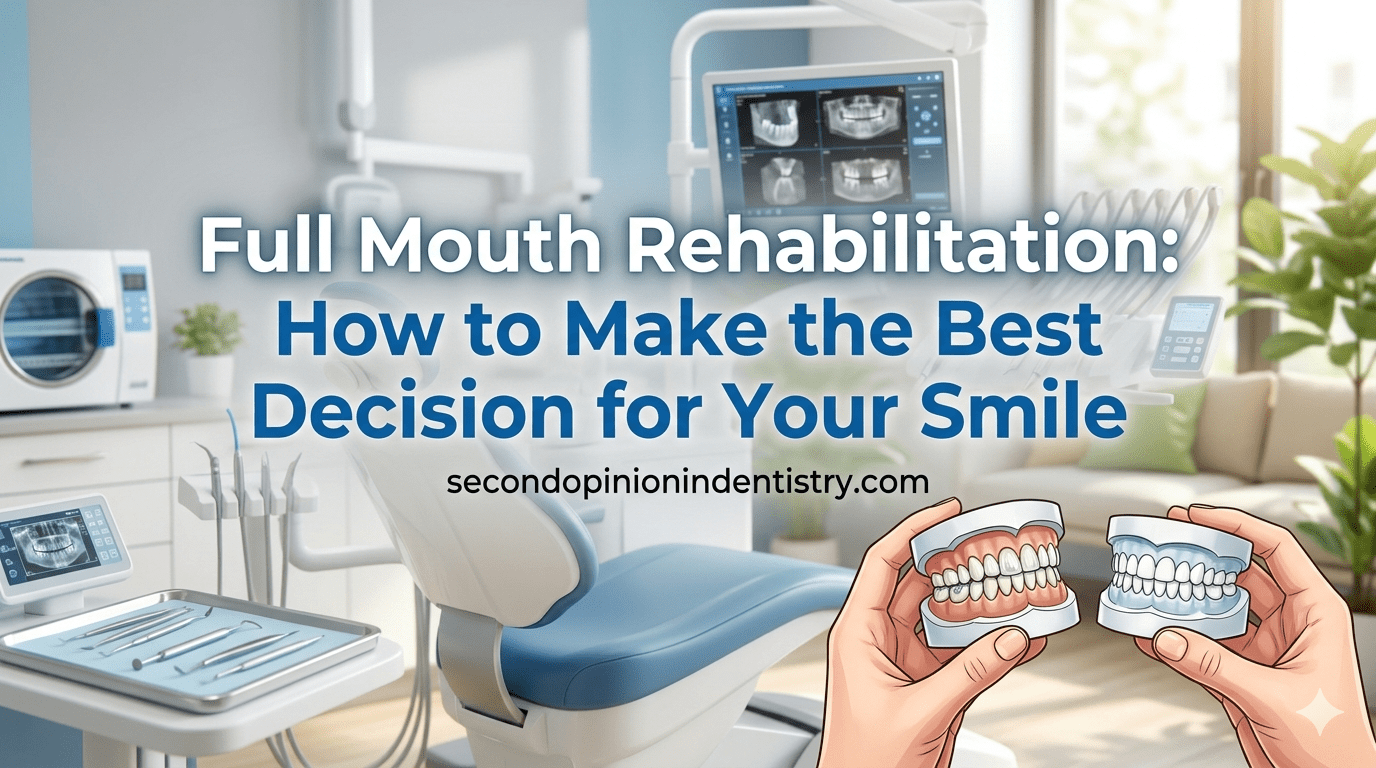
A well-designed rehabilitation plan should begin with a thorough diagnosis that documents your current condition in detail. This includes a complete set of X-rays, study models or digital scans of your teeth, a detailed bite analysis, and a written treatment plan that explains the rationale for each procedure and the sequence of treatment.
The plan should also address the final result clearly: what will your bite look like, how will your teeth function, and what will the maintenance requirements be over time?
Why an Independent Second Opinion Is Essential Here
Given the scope, cost, and irreversibility of full mouth rehabilitation, an independent second opinion is not a precaution — it is a fundamental part of responsible decision-making. An independent specialist can confirm that the treatment plan addresses your actual clinical needs, that the proposed approach is sound and appropriately sequenced, that the estimated investment is in line with the scope of work, and that alternatives have been considered.
Patients who invest in an independent review before beginning full mouth rehabilitation consistently report greater confidence in their decision and a more informed relationship with their treating team.
Getting Started
If you have received a full mouth rehabilitation plan and want an independent assessment before committing, our specialists at Second Opinion in Dentistry can review your X-rays, photographs, and treatment plan and provide a written evaluation within 48 hours. Visit secondopinionindentistry.com to submit your case.