Why Do Dental Crowns Fail? Causes and Next Steps
Why do dental crowns fail? Learn the common causes, warning signs, and questions to ask before paying for repair or replacement treatment with confidence.
A crown that comes loose, cracks, or starts hurting can feel especially frustrating after a major dental expense. So, why do dental crowns fail? The short answer is that a crown may be intact while the tooth, gum tissue, bite, or cement beneath it has changed. The right solution depends on identifying the actual problem, not simply replacing the crown by default.
A dental crown is a protective cover placed over a damaged, heavily filled, root canal-treated, worn, or fractured tooth. It can last many years, but it is not permanent. More importantly, a crown has to work as part of a system: the underlying tooth must be stable, the margins must remain sealed, the gums must be healthy, and the bite forces must be manageable.
Why Do Dental Crowns Fail? It Depends on What Failed
When someone says a crown has failed, that can mean several different things. The porcelain may have chipped, the crown may have fallen off, decay may have formed underneath it, or the tooth supporting it may have cracked. These problems have different causes and may require very different treatment.
Decay develops at the crown edge
A crown cannot get a cavity, but the natural tooth at its edge can. Bacteria can collect where the crown meets the tooth, especially if plaque is not fully removed or the crown margin is difficult to clean. Over time, decay can undermine the tooth structure that holds the crown in place.
This is one of the most common reasons a crown needs replacement. It does not necessarily mean the original crown was poorly made. Decay risk is affected by brushing and flossing habits, dry mouth, diet, gum recession, the shape and location of the crown margin, and how much natural tooth remained when the crown was placed.
Early decay beneath a crown may not hurt. A dentist may see a suspicious area on an X-ray, but X-rays do not show every type of leakage or decay clearly. Sometimes the crown must be removed before the full condition of the tooth can be confirmed.
The cement seal breaks down or the crown loses retention
Crowns are held in place with dental cement, but cement is not a permanent glue that can overcome every challenge. If the crown was placed over a short, tapered, or heavily damaged tooth, there may be limited surface area for retention. Repeated chewing forces can eventually loosen the bond.
A crown can also come off after biting something hard or sticky. If it comes off cleanly and the tooth underneath is sound, recementing it may be possible. If decay, a fracture, or loss of tooth structure is present, simply putting the same crown back may not solve the problem.
Do not use household glue to reattach a crown. It can damage the crown, irritate tissue, trap bacteria, and make proper treatment more difficult. Keep the crown in a clean container and contact a dentist promptly.
The crown or the tooth fractures
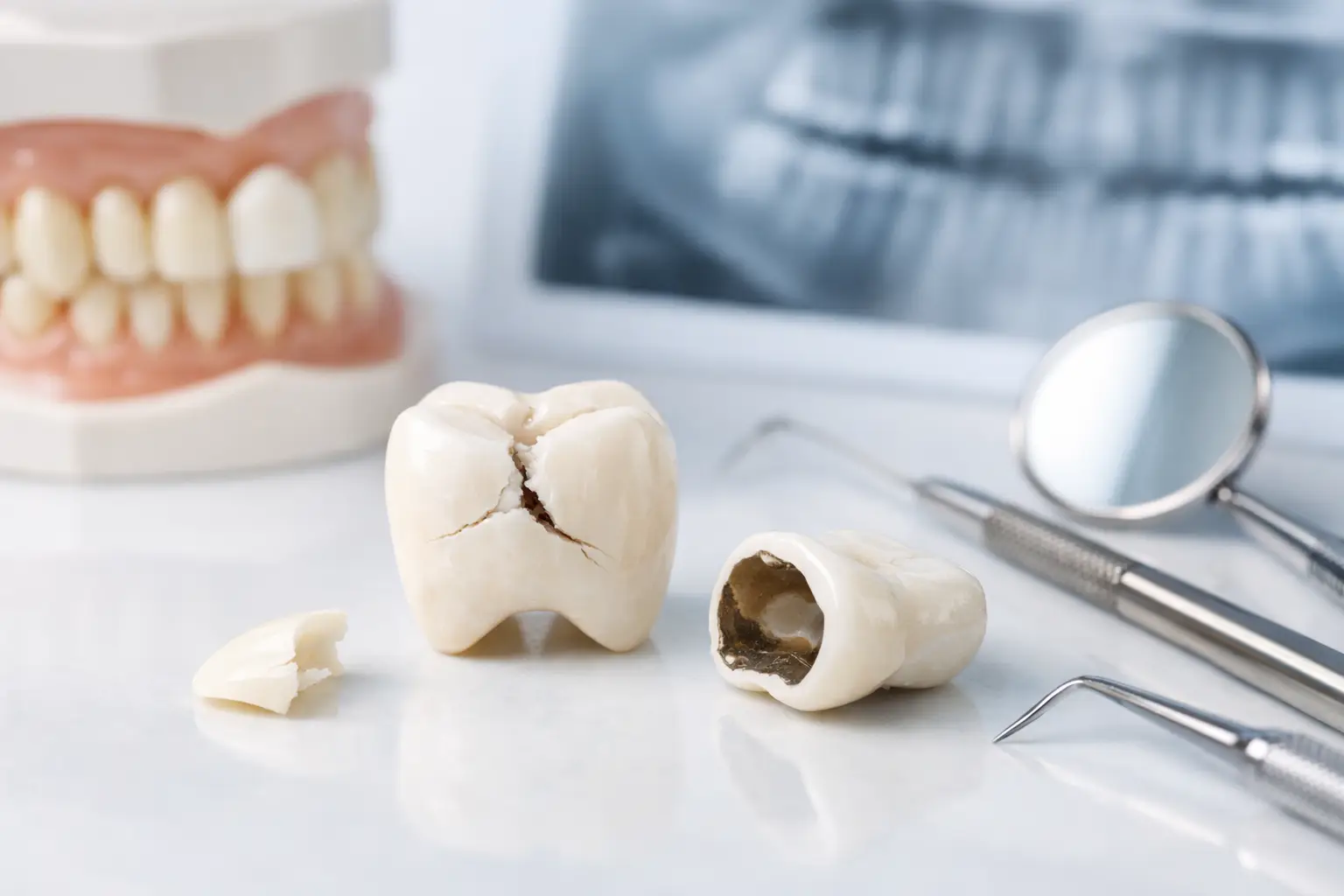
Porcelain can chip, metal can wear, and ceramic can crack. Sometimes a small chip is cosmetic and can be polished or repaired. A crack that affects the fit, exposes rough material, or weakens the crown may require replacement.
The more serious concern is a fracture in the tooth beneath the crown. Teeth with large old fillings, deep decay, or root canal treatment can have less remaining natural structure. A crown protects the visible portion of the tooth, but it cannot always prevent a crack from extending into the root.
A vertical root fracture may not be visible on a standard X-ray. Signs can include pain when biting, a recurring gum bump, localized deep gum pocketing, or infection around the root. Depending on the location and extent of the fracture, the tooth may be repairable, may need a specialist procedure, or may not be savable.
Bite pressure overwhelms the restoration
Crowns are strong, but they are not indestructible. Grinding or clenching can place intense, repetitive force on a crown and the tooth below it. A high spot in the bite can also make one tooth take more pressure than it should.
This can contribute to chips, cracks, loosening, jaw soreness, and sensitivity. Back teeth are particularly exposed because they handle heavier chewing forces. A night guard may help protect crowns for people who grind their teeth, but it must fit correctly and should not be treated as a substitute for checking a problematic bite.
Gum disease and bone loss reduce support
A crown can look fine above the gumline while the tooth is losing support below it. Periodontal disease can cause bone loss around crowned teeth just as it can around untreated teeth. Gum recession may expose the crown edge, make cleaning harder, and increase the risk of decay at the root surface.
If a tooth feels mobile, bleeds regularly, has persistent bad taste, or develops swelling near the crown, the issue may involve the gums and bone rather than the crown material itself. Replacing the crown without addressing periodontal disease may lead to another expensive failure.
Infection persists or returns after root canal treatment
Many crowned teeth have had root canal treatment. If bacteria remain in the root canal system or enter through a leak, infection can develop around the root tip. This may cause tenderness, swelling, a pimple-like bump on the gums, or no symptoms at all.
A new crown is not automatically the answer. The tooth may need root canal retreatment, root-end surgery, monitoring, or extraction depending on the diagnosis. In some cases, accessing the root canal through an existing crown is reasonable. In others, removing the crown is necessary to evaluate the tooth and restore it properly afterward.
A Failed Crown Does Not Always Mean Poor Dentistry
It is reasonable to ask whether the crown was designed, fitted, or placed appropriately. Poor fit, open margins, inadequate bite adjustment, weak material selection, or insufficient tooth preparation can contribute to problems. But crowns also fail because mouths change over time.
A crown placed years ago may have been clinically acceptable at the time but later face new decay, gum recession, grinding, trauma, or changes in the neighboring teeth. The lifespan of a crown is not a guarantee. It depends on the tooth’s starting condition and everything that happens after placement.
This distinction matters when a dentist recommends replacing a crown. The recommendation may be justified, but you deserve a clear explanation of what has changed and what evidence supports it.
Warning Signs That Need a Prompt Evaluation
A loose crown, visible crack, broken tooth, swelling, or severe pain should not be ignored. Seek timely care if you have pain when biting, persistent sensitivity to heat or cold, a bad taste near the tooth, bleeding around one crown, or a crown that feels higher than the rest of your bite.
Facial swelling, fever, trouble swallowing, or difficulty breathing require urgent medical or dental attention. These can be signs of a spreading infection.
Not every concern is an emergency. Mild sensitivity after a crown is placed can settle as the tooth adapts. A small, smooth porcelain chip may not require immediate replacement. The deciding factor is whether there is active disease, structural risk, poor function, or a threat to the tooth’s long-term prognosis.
How to Evaluate a Crown Replacement Recommendation
If you are told a crown has failed, ask for the specific reason in plain language. Is there decay under the edge? Is the crown cracked? Is the tooth fractured? Is there an infection on the X-ray? Is the tooth stable enough to support another crown?
You can also ask whether the proposed treatment is the most conservative option. For example, could the crown be recemented, repaired, monitored, or treated with a filling? If replacement is recommended, ask what material is being proposed, whether a root canal or buildup is needed, and whether the tooth’s long-term outlook is favorable.
Request copies of your X-rays, clinical photographs, treatment plan, and cost estimate. These records help you understand the recommendation and make it possible to obtain an independent review. A second opinion is particularly valuable when a crown replacement is paired with additional procedures, such as a root canal, gum treatment, implant, or multiple new crowns.
An independent review should not promise that a crown can be saved from a distance. What it can do is assess whether the records support the diagnosis, identify questions that have not been answered, and clarify reasonable alternatives before you commit to treatment. Second Opinion in Dentistry provides this kind of written review without selling the dental procedures being evaluated.
A crown problem is often manageable when it is addressed early. Before agreeing to a costly replacement plan, make sure you know whether the crown, the tooth beneath it, or the surrounding gums are truly the source of the problem. Clear evidence now can protect both your tooth and your budget later.