Dental X Ray Review Before You Accept Treatment
A dental x ray review can clarify what your images show, whether treatment is necessary, and which questions to ask before you commit to care calmly.
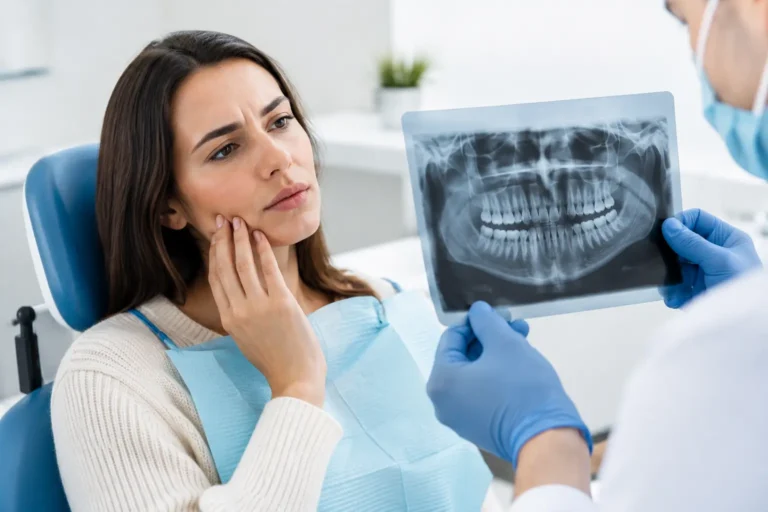
A treatment plan can feel final the moment a dentist points to a shadow on an X-ray and recommends a crown, root canal, implant, or extraction. It is not final. A dental x ray review gives you a qualified, independent look at what the images actually show before you agree to expensive or irreversible care.
That does not mean every recommendation is wrong. Many are appropriate and time-sensitive. But when the cost is high, the diagnosis is unclear, or you have received conflicting advice, you deserve evidence you can understand – without pressure to buy treatment from the person reviewing it.
What a dental x ray review can tell you
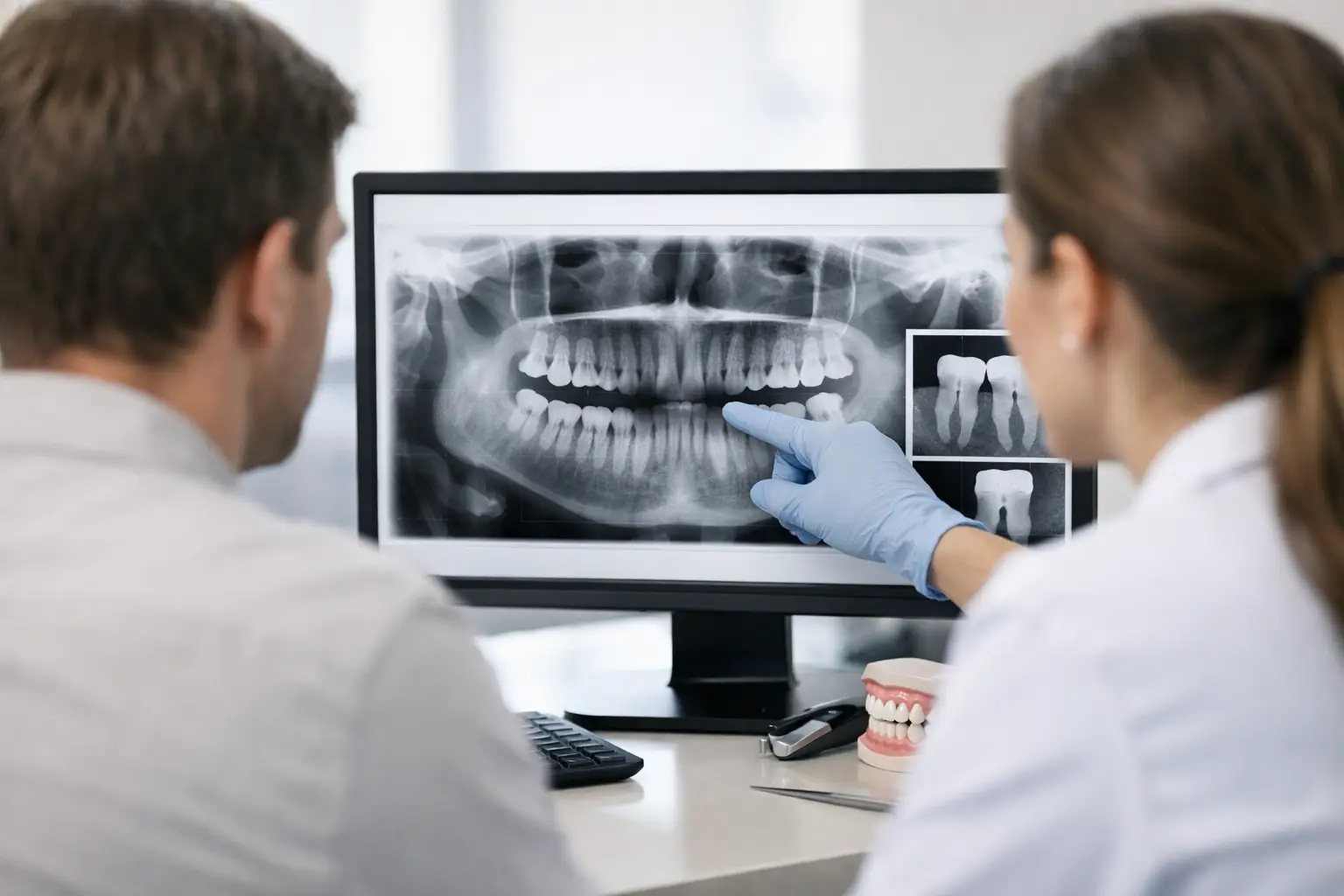
Dental X-rays, also called radiographs, reveal areas that cannot be assessed fully during a visual exam. They can show decay between teeth, bone loss around teeth, infections near root tips, impacted teeth, fractures in some cases, and the condition of existing fillings, crowns, bridges, or implants.
A professional review looks beyond whether there is a dark or light area on an image. The reviewer considers where it is, how large it appears, whether the image quality supports a confident interpretation, and whether the finding matches the treatment being recommended. They also consider what cannot be determined from the X-ray alone.
For example, a cavity visible between two teeth may need treatment, but the image may not establish whether a small filling, monitoring, or additional clinical information is appropriate. Bone loss may be visible, but a radiograph alone cannot measure gum pocket depth or diagnose the full severity of periodontal disease. A dark area near a root can suggest infection, yet symptoms, prior treatment history, and examination findings still matter.
The value is clarity. You should come away knowing what appears supported by the available records, where uncertainty remains, and what questions should be answered before treatment begins.
When an independent review makes sense
A second look is especially useful when a recommendation involves several procedures, a large financial commitment, or a permanent change to your teeth. This commonly includes full-mouth reconstruction plans, multiple crowns, root canals, extractions, implants, veneers, periodontal treatment, and orthodontic recommendations tied to other restorative work.
It can also help when two dental offices have told you different things. One dentist may recommend replacing several older fillings while another suggests watching them. One may recommend an extraction while another believes a tooth may be restorable. Different clinical opinions do happen, but you should not have to choose based only on urgency, office atmosphere, or fear of making the wrong call.
An independent dental X-ray review is not designed to delay emergency care. If you have facial swelling, difficulty breathing or swallowing, uncontrolled bleeding, severe trauma, or a rapidly worsening infection, seek urgent in-person care. Remote review is best for decisions where you have enough time to gather records and assess your options carefully.
The X-rays that may be relevant
The useful images depend on the recommendation. Bitewing X-rays are often used to assess cavities between back teeth and the bone level around them. Periapical X-rays show an entire tooth from crown to root tip and can be useful for suspected infection, root canal questions, or localized pain.
A panoramic X-ray provides a broad view of the jaws, teeth, sinuses, and some surrounding structures. It is often included in extraction, implant, wisdom tooth, or extensive treatment planning. Cone beam CT, or CBCT, creates a three-dimensional view and may be relevant for surgical implant planning, complicated root anatomy, impacted teeth, and certain jaw concerns.
More images do not automatically mean a better answer. A clear, recent image that directly relates to the recommended treatment is generally more useful than a large collection of old or unrelated films. Image quality, viewing angle, and date all affect what can reasonably be concluded.
What to submit for a useful review
X-rays rarely tell the whole story. The strongest review combines the radiographs with the documents that explain why treatment was proposed. Ask the dental office for copies of your records. In the United States, patients generally have the right to access their health information, though offices may have reasonable procedures for providing it.
For most cases, submit the relevant X-rays along with the written treatment plan and cost estimate. If available, include the dentist’s clinical notes, periodontal charting, intraoral photographs, and any referral or specialist report. A brief description of your symptoms, concerns, and treatment goals is also valuable.
If you are asking about a tooth that hurts, explain when the pain occurs, whether it wakes you at night, whether hot or cold triggers it, and whether you have swelling. If you are questioning cosmetic or restorative work, say what you have been told about the condition of your existing teeth and what outcome you want. Details help the reviewer separate a radiographic finding from a treatment decision.
Avoid taking cellphone photos of X-rays displayed on a bright screen if original image files or office-generated PDFs are available. Reflections, glare, and low resolution can hide the details that matter. If a photo is the only option, take it straight on, in good light, with the full image visible.
What an honest review should and should not do
A credible review should explain the evidence in plain language. It should identify whether the images support the stated diagnosis, whether the proposed scope of work appears reasonable, and whether alternatives or additional records may be worth discussing. It should also flag limitations instead of pretending that every question can be answered remotely.
For instance, a reviewer may say that an X-ray supports decay under an existing crown but cannot confirm whether the tooth is restorable without an in-person exam. Or they may find that the available images do not clearly justify replacing every crown in a large plan and recommend asking the treating dentist for tooth-by-tooth reasons.
Be cautious of anyone who promises to overturn a diagnosis based on images alone or guarantees that you do not need treatment. Dentistry is clinical care, not a contest between opinions. The goal is a well-reasoned assessment that helps you make a more informed decision with your treating dentist.
A remote review also does not replace an examination when one is needed. No reviewer can test tooth vitality, feel a crack, check a bite, measure gum pockets, or assess swelling through an X-ray. Those limits are not a weakness. They are part of an honest interpretation.
Questions worth asking after the review
The most useful outcome may be a better conversation with your dentist. Rather than asking, “Do I really need this?” ask questions that invite specific clinical reasoning: What finding supports treatment on each tooth? What happens if we monitor this for six or twelve months? Is there a less invasive option? Which procedures are urgent, and which can be phased? What additional exam findings support what the X-ray shows?
If replacement work is recommended, ask whether the issue is active decay, fracture risk, leakage, pain, cosmetic preference, or expected longevity. These are different reasons with different levels of urgency. A restoration that is not perfect is not always a restoration that must be replaced immediately.
For implant or extraction recommendations, ask whether the tooth has been evaluated for root canal retreatment, periodontal treatment, or restoration. Sometimes extraction is the best option. Sometimes preserving a natural tooth is clinically reasonable. The right answer depends on the tooth, your overall health, your bite, the long-term prognosis, and your priorities.
Getting a review without another sales conversation
An independent service is most helpful when the reviewer has no financial benefit from the treatment outcome. Second Opinion in Dentistry provides written evaluations by licensed dental professionals who do not perform or sell the procedures they review. Records can be uploaded securely, with reviews typically delivered within 48 business hours and options starting at $49.
That separation matters. A review should help you understand the recommendation, not move you toward a procedure package. You are paying for professional interpretation and clear reasoning, not for a sales consultation disguised as reassurance.
Before you commit to significant dental work, gather your X-rays, treatment plan, and estimate. A clear explanation of what the evidence supports can replace rushed uncertainty with questions you can confidently bring back to your dentist.