Dental Misdiagnosis and a Second Opinion
Worried about a dental misdiagnosis? Learn warning signs, records to request, and how an independent second opinion can clarify your options before care.
A dental misdiagnosis can leave you caught between two uncomfortable choices: agree to expensive treatment you do not fully understand, or delay care because something does not feel right. That uncertainty is especially difficult when the recommendation involves multiple crowns, root canals, implants, extractions, gum surgery, or a treatment plan totaling thousands of dollars. You deserve clear answers before committing.
A different opinion does not automatically mean the first dentist was wrong. Dentistry often involves clinical judgment, image quality, symptoms, and the condition of teeth that may change over time. But when the diagnosis, scope of treatment, or estimated cost feels unclear, an independent review can help you understand what the records actually support.
What dental misdiagnosis can look like
Dental misdiagnosis is not limited to a dentist overlooking a cavity or confusing one condition for another. It can also involve diagnosing a problem as more severe than the available evidence suggests, recommending treatment that may be broader than necessary, or failing to explain reasonable alternatives.
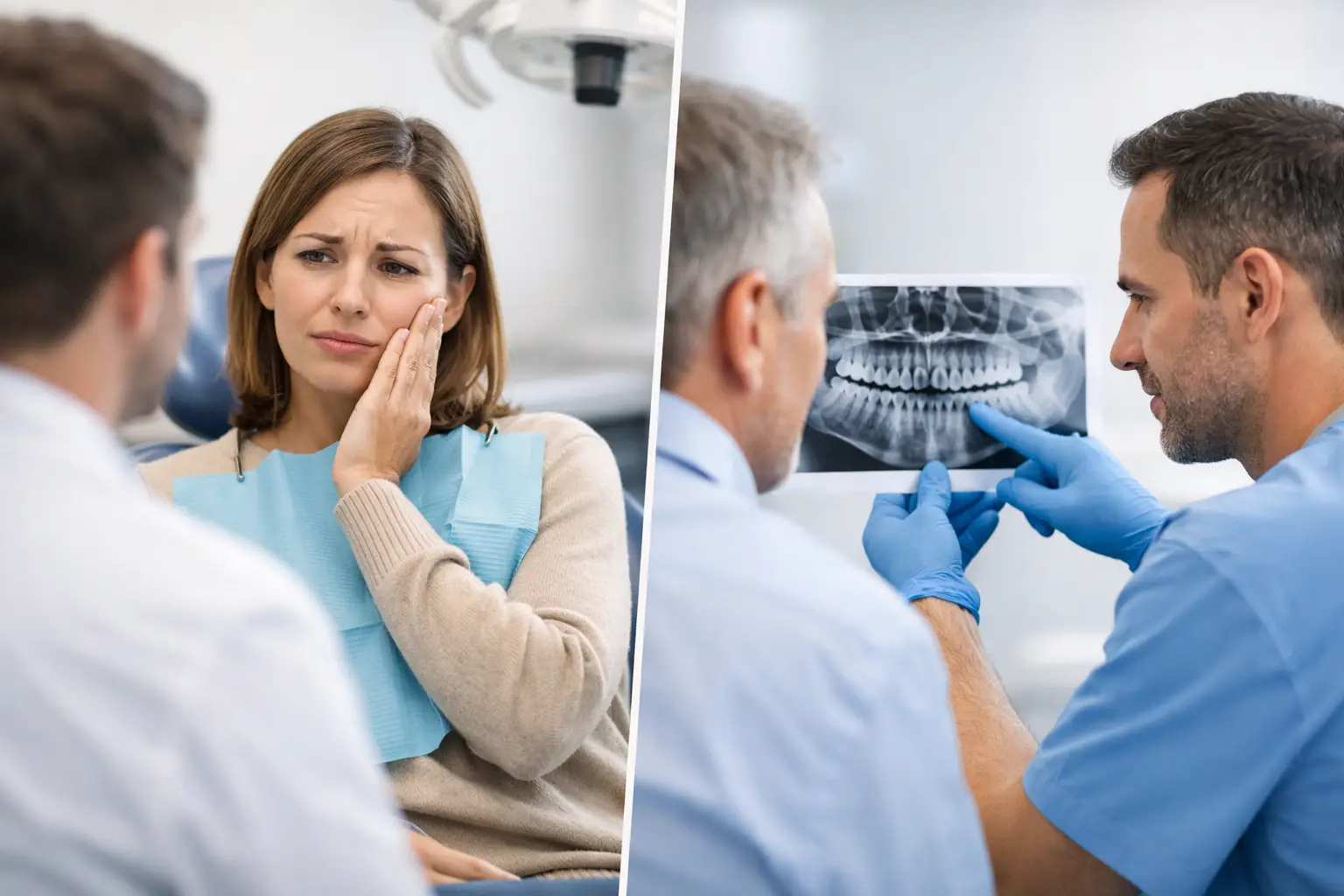
For example, a painful tooth may be recommended for root canal treatment, but the pain could be related to a cracked filling, bite pressure, gum inflammation, or an issue in a neighboring tooth. A dark area on an X-ray may indicate decay, but it may also require comparison with symptoms, clinical photographs, prior X-rays, and an in-person exam before its significance is clear.
The same is true for larger plans. Several damaged teeth may genuinely need crowns or implants. In other cases, a more conservative option, staged treatment, monitoring, or repair may be reasonable. The key question is not simply, “Was I told I need treatment?” It is, “What evidence supports this recommendation, what are the alternatives, and what happens if I wait?”
Warning signs that justify a second opinion
You do not need to prove that a diagnosis is wrong before seeking another professional view. A second opinion is a practical safeguard when the decision is significant or the explanation does not match the size of the recommendation.
Consider requesting a review if you were told you need extensive work after a short appointment, particularly if you did not receive a clear explanation of the X-rays or photographs. It is also reasonable to pause when one office recommends several major procedures and another recommends far less treatment, or when the treatment plan changes substantially from a recent visit without a clear reason.
Other warning signs include pressure to schedule immediately, limited discussion of alternatives, a cost estimate that is difficult to follow, or a recommendation to replace multiple restorations that are not causing symptoms. None of these signs proves misconduct or poor care. They do suggest that asking more questions is sensible.
Trust your instincts if the conversation leaves you confused. A dentist should be able to explain the diagnosis in plain language, identify the teeth involved, describe the purpose of each procedure, and discuss the risks of proceeding, delaying, or choosing another option.
Request the records behind the recommendation
A strong second opinion begins with the same information used to create the original treatment plan. You can request copies of your dental records from the treating office. Having them organized before you seek review saves time and gives the reviewing dentist a fuller picture.
For a comprehensive review, ask for these materials:
- Recent X-rays, ideally in their original digital format when available
- Clinical photographs of the teeth and gums
- The written diagnosis and treatment plan, including tooth numbers
- A detailed cost estimate and any insurance breakdown
- Relevant notes, prior X-rays, and records of symptoms or previous treatment
If you are reviewing a single recommendation, such as a root canal, extraction, crown, implant, or periodontal procedure, the records related to that tooth or area may be enough. For a full-mouth treatment plan, broader documentation is usually more useful because bite changes, gum health, missing teeth, and older dental work can affect the recommendation.
What an independent dental review can answer
The most useful review does more than say yes or no. It explains whether the records appear consistent with the proposed treatment and where the evidence is limited. It can also identify questions to bring back to your treating dentist.
A licensed reviewer may help clarify whether a procedure appears urgent, whether treatment could be phased, whether a less invasive option may deserve discussion, or whether more information is needed before a decision can be made. They can review whether the fees and proposed sequence make sense in the context of the documentation provided.
There are limits. A remote review cannot replace an emergency examination or guarantee that every clinical finding can be confirmed from uploaded records. Some concerns require an in-person exam, bite testing, periodontal probing, or additional imaging. Honest advice should make those limits clear rather than offering false certainty.
Second Opinion in Dentistry provides written independent evaluations from licensed dental professionals using submitted X-rays, photos, treatment plans, estimates, and supporting records. Because it does not perform or sell the procedures it reviews, its role is to help patients assess necessity, scope, alternatives, and cost without upselling or pressure. Reviews are delivered online, with defined turnaround options including delivery within 48 business hours.
Questions to ask before accepting treatment
Before you authorize major dental work, ask your provider to walk through the plan tooth by tooth. Start with the diagnosis: What specifically is wrong, and what evidence confirms it? Then ask what the recommended procedure is intended to prevent or fix.
It is also reasonable to ask whether the treatment is urgent, what can safely be monitored, and whether there are lower-cost or more conservative alternatives. If an extraction or implant is proposed, ask why the tooth cannot be restored, if restoration is feasible. If multiple crowns are proposed, ask whether each one is medically necessary now or whether some can be repaired, monitored, or staged.
Cost deserves direct discussion too. Request an itemized estimate that separates examinations, imaging, procedures, materials, laboratory fees, sedation, and follow-up visits. If insurance is involved, confirm which amount is estimated and which portion you may ultimately owe. A large plan can be appropriate, but it should never be a financial mystery.
When not to wait for another review
A second opinion is valuable for planned care, but urgent symptoms should be addressed promptly. Seek in-person dental or medical care right away for facial swelling, fever, difficulty breathing or swallowing, uncontrolled bleeding, severe trauma, or worsening pain with signs of infection. These situations may require immediate treatment.
For less urgent concerns, there is often time to gather records and understand your options. Do not let a sales deadline, financing offer, or vague warning force you into a decision before you have enough information. If treatment truly cannot wait, the provider should be able to explain why in specific clinical terms.
Clarity is part of good dental care
You are not being difficult by asking for X-rays, a written plan, an itemized estimate, or another professional perspective. You are making an informed decision about your health, your time, and your money. The right next step is the one you can understand and feel confident accepting – with clear evidence, realistic alternatives, and no pressure.