
Complex Dental Case Evaluation: What to Check
A complex dental case evaluation helps you review diagnosis, options, risks, records, and costs before committing to extensive treatment with confidence.
A treatment plan that includes implants, crowns, root canals, gum treatment, extractions, or full-mouth reconstruction can be difficult to assess from a quick conversation at the dental office. The recommendations may be medically appropriate, but when the plan affects multiple teeth, requires surgery, or costs thousands of dollars, a complex dental case evaluation gives you space to understand what is being proposed before you agree.
The goal is not to assume your dentist is wrong. It is to turn a high-stakes recommendation into clear questions, evidence, options, and next steps. A careful review can help you distinguish between treatment that is urgent, treatment that is advisable but can be planned, and treatment that may deserve a closer look.
What makes a dental case complex?
A case is complex when one decision affects several others. For example, removing a tooth may lead to a recommendation for an implant, bone graft, crown, and possible gum treatment. Replacing multiple missing teeth may involve bite changes, temporary restorations, surgical planning, and long-term maintenance. A fractured tooth can raise questions about whether a root canal and crown can predictably save it or whether extraction is the more durable choice.
Complexity is not determined by price alone. A single tooth can be clinically complicated if the tooth has a deep crack, prior root canal treatment, significant bone loss, or uncertain symptoms. Conversely, a larger plan may be straightforward if the diagnosis and supporting images are clear.
The more a plan depends on several procedures working together, the more valuable it becomes to understand the sequence, assumptions, risks, and alternatives. You should not have to make that decision while feeling rushed or unsure what the X-rays actually show.
What a complex dental case evaluation should answer
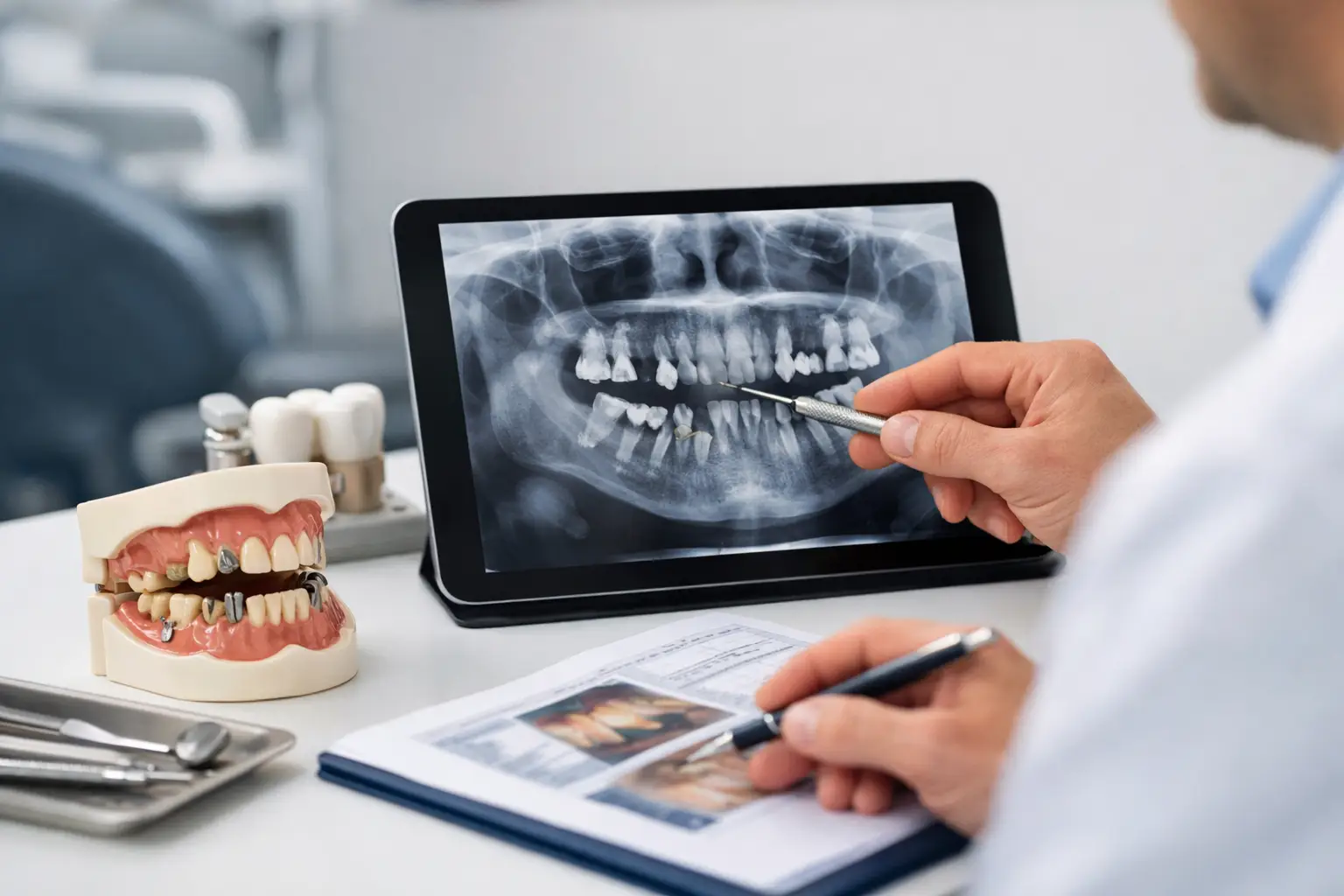
A useful review begins with the evidence, not with the sales presentation. A licensed dental professional reviewing your records should be able to explain whether the stated diagnosis appears supported by the available X-rays, photographs, clinical notes, and treatment plan.
The review should also address necessity and scope. Is every recommended procedure needed now? Could part of the plan be monitored, staged, or treated more conservatively? If a tooth is being called non-restorable, what finding supports that conclusion? If implants are recommended, is there a practical tooth-saving option worth discussing?
There is not always one correct answer. Dentistry often involves judgment, particularly when deciding between preserving a compromised tooth and replacing it. A clear evaluation explains that trade-off rather than presenting one expensive path as the only possible path.
Cost deserves the same level of scrutiny. You want to know whether the estimate aligns with the procedures listed, whether key steps are missing from the quote, and where future costs may arise. A lower initial estimate is not necessarily less expensive if it excludes imaging, sedation, lab work, temporary restorations, grafting, or follow-up care.
Records that help an independent reviewer see the full picture
The quality of a second opinion depends on the quality of the materials available. You do not need to understand every image before submitting it, but complete records allow the reviewer to identify what is known and what still needs clarification.
For a complex case, gather the written treatment plan and itemized cost estimate first. Ask for copies of your X-rays, including any full-mouth series, panoramic X-ray, or 3D CBCT scan that was used to plan care. Intraoral photos, periodontal charting, recent clinical notes, and reports from specialists can also be useful.
Your own description matters, too. Explain where you have pain, how long it has been present, whether you have swelling or sensitivity, and what treatment has been done in the past. If you have received different recommendations from two offices, include both plans. The disagreement may reveal that the clinicians are working from different information, using different treatment philosophies, or prioritizing different risks.
When possible, submit original image files or clear copies from the dental office rather than screenshots. Blurry images can limit what any reviewer can responsibly conclude. A trustworthy opinion should say when the evidence is insufficient instead of making promises based on incomplete records.
Questions to ask before accepting extensive treatment
Before scheduling irreversible care, ask your treating dentist to walk you through the diagnosis in plain language. You are entitled to understand why a procedure is recommended and what happens if you wait.
For large restorative or surgical plans, these questions can bring needed clarity:
- Which teeth or areas are urgent, and what clinical finding makes them urgent?
- What are the realistic alternatives, including saving the tooth, monitoring it, or staging treatment?
- What is the expected lifespan of each option, and what maintenance will it require?
- What complications are possible, and how would they be managed?
- Does the estimate include all planned phases, materials, anesthesia, laboratory fees, temporaries, and follow-up visits?
- If this plan changes after treatment begins, what additional costs might apply?
Answers do not need to be simple to be helpful. “It depends” can be an honest clinical answer when it is followed by an explanation of what factors determine the decision. What matters is that you understand the uncertainty, the reasoning, and the financial implications before treatment starts.
Why independence matters in a high-cost plan
Most dental professionals want to help their patients. At the same time, a provider who recommends and performs treatment is part of the financial transaction. That does not make the recommendation invalid, but it can make a patient wonder whether a costly option has been presented as more urgent or more certain than the records support.
An independent review creates a different setting. The reviewer does not perform the procedure, sell implants or crowns, or benefit if you accept one plan over another. That separation allows the discussion to focus on whether the diagnosis is supported, whether the scope is reasonable, and what questions should be brought back to your local dentist.
Second Opinion in Dentistry provides written reviews by licensed dental professionals, with secure online record submission and a defined turnaround of up to 48 business hours. For patients weighing major work, an independent written assessment can be easier to revisit than a fast conversation between appointments.
What a second opinion can and cannot do
A remote evaluation can be highly useful for interpreting existing records, comparing recommendations, identifying missing information, and preparing you for a more productive conversation with your treating dentist. It may help you avoid committing to treatment before you understand it.
It cannot replace an in-person examination when a clinician needs to test a tooth, measure mobility, assess a bite, examine soft tissue, or evaluate symptoms directly. Some questions can only be resolved through a clinical exam, additional imaging, or a consultation with a relevant specialist.
That limitation is a sign of responsible care, not a weakness. A credible reviewer will separate findings visible in the records from issues that require hands-on evaluation. If your materials do not support a firm conclusion, the appropriate next step may be to request specific records or seek an in-person specialist examination.
When you should not wait for a remote review
A second opinion is best used when you have time to make a thoughtful decision. If you have facial swelling, fever, difficulty breathing or swallowing, uncontrolled bleeding, severe trauma, or rapidly worsening pain, seek urgent in-person dental or medical care. Those symptoms may require immediate assessment and should not wait for an online records review.
For non-emergency treatment plans, even a short pause can be worthwhile. A crown, implant, extraction, root canal, or full-mouth rehabilitation is easier to evaluate before irreversible steps have begun. Once teeth are removed or prepared for restorations, your choices can become narrower.
Use clarity to make the next decision easier
A complex plan should leave you with more than a total price and a scheduling request. You should know what the records show, which procedures are time-sensitive, what reasonable alternatives exist, and what questions remain unanswered.
Getting another qualified perspective is not a rejection of your dentist. It is a practical way to protect your health, your budget, and your ability to choose without pressure. The best next step is the one you can explain back to yourself clearly: what is being treated, why it is needed, what it will involve, and why that path makes sense for you.